In the high-traffic laundry centers of Lagos, Abuja, and Port Harcourt, a hidden health crisis is simmering beneath the scent of "fresh linen." For decades, the Nigerian laundry industry has relied on aggressive, petroleum-based chemicals to combat the stubborn stains of urban life. While these industrial-grade detergents are undeniably powerful, they come with a steep price that isn't always visible on the invoice. In 2026, we are seeing a dramatic rise in "Contact Dermatitis" among laundry workers and respiratory sensitivities among customers all linked to the chemical residues left behind by traditional detergents.
The problem is that many of the most common cleaning agents used in Nigeria today are packed with toxic chemicals in laundry detergent that have been restricted or banned in other parts of the world. From endocrine disruptors that affect hormones to volatile organic compounds (VOCs) that degrade indoor air quality, the "chemical cocktail" in your washroom could be a ticking time bomb for your brand's reputation. As a laundry owner, you aren't just responsible for the cleanliness of the clothes; you are responsible for the safety of the people who wear them and the staff who process them.
The transition to plant-based detergents is no longer a niche "lifestyle" choice; it is a fundamental shift toward "Wellness-Driven Garment Care." By eliminating toxins, you position your business as a premium, health-conscious leader in the 2026 market. To manage this sophisticated transition and ensure your supply chain remains "clean," you need the best tool to manage your laundry business, CloudLaundry.
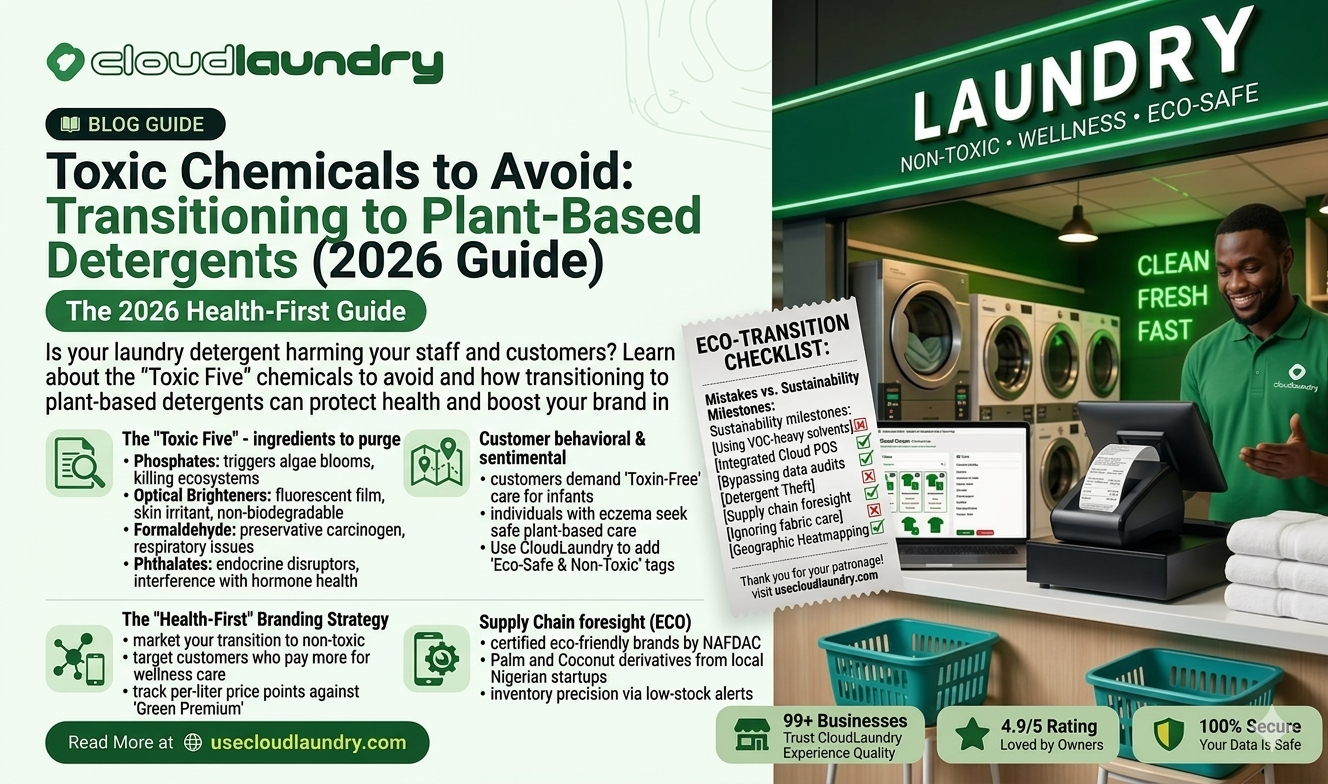
The “Toxic Five”: Ingredients to Purge Today
To transition effectively, you must first know what you are fighting. In 2026, these five ingredients are the primary targets for elimination in professional Nigerian laundries:
- Phosphates: Used to soften water and boost cleaning, but they trigger massive algae blooms in Nigerian waterways, killing fish and ruining local ecosystems.
- Optical Brighteners: These chemicals don't actually clean; they coat fabrics in a fluorescent film that reflects light to make clothes look whiter. They are highly irritating to the skin and do not biodegrade.
- Formaldehyde: Often hidden as a preservative, this known carcinogen can cause severe respiratory issues for staff working in poorly ventilated drying areas.
- Phthalates: Found in synthetic fragrances. These are endocrine disruptors that can interfere with hormone health, a major concern for customers cleaning baby clothes or bedding.
- Sodium Lauryl Sulfate (SLS): A harsh foaming agent that strips the natural oils from skin and fabric fibers, leading to premature garment wear and staff "hand-burn."
By identifying and removing these toxic chemicals in laundry detergent, you immediately elevate your shop's safety profile.
The Power of Plant-Based Chemistry
Many old-school laundry operators in Nigeria believe that "natural" means "weak." In 2026, this is a myth. Modern plant-based detergents utilize advanced bio-enzymes derived from corn, coconut, and citrus.
- The Bio-Enzyme Advantage: Unlike harsh chemicals that "blast" stains away by damaging the fabric, plant-based enzymes act like tiny "molecular scissors." Protease breaks down protein stains (blood, sweat, grass), Amylase attacks starches (food spills), and Lipase dissolves oils and fats. Because these enzymes are specialized, they clean more effectively at lower temperatures and with much less mechanical friction, extending the life of your customers' expensive lace, silk, and senator fabrics.
- Biodegradability: Plant-based detergents break down naturally within days, meaning the "Greywater" leaving your shop doesn't poison the local soil or groundwater—a critical factor for shops relying on septic systems or local drainage.
The "Health-First" Branding Strategy
Why would a customer in Lagos pay more for a "Plant-Based" wash? Because health is the new luxury.
- Targeting the "Sensitive" Market: In 2026, there is a massive surge in parents seeking "Toxin-Free" care for their infants and individuals with eczema or asthma. By marketing your transition to plant-based detergents, you aren't just selling "clean"; you are selling "safety."
- The "Safety Stamp": Use CloudLaundry to add a "Eco-Safe & Non-Toxic" tag to your digital receipts.
- Staff Wellness: Highlight that your staff work in a VOC-free environment. A happy, healthy team is more productive and provides better service.
Calculating the ROI of the Transition
Plant-based detergents often carry a higher "Per-Liter" price tag than cheap industrial powders. However, the true ROI is found in the "Total Operational Cost."
1. Lower Temperature Washing: Plant-based enzymes are designed to be most active between 30°C and 40°C. Traditional chemicals often require 60°C+ to be fully effective. The savings on your gas or electricity bill from "Cold-Wash" cycles can offset the higher detergent cost.
2. Fabric Longevity: Harsh chemicals weaken fabric fibers over time. When you use plant-based care, your customers' clothes last longer and stay brighter. This reduces “Damage Claims” a major "hidden cost" that usecloudlaundry.com helps you track and minimize.
3. Market Premium: You can easily justify a 15–20% premium for "Plant-Based Care." Customers are willing to pay for the peace of mind that comes with knowing their clothes are free from toxic chemicals in laundry detergent.
Step-by-Step Transition for Your Shop
Don't dump all your old stock at once. A phased transition is more manageable.
- Step 1: The "Baby & Bedding" Pilot: Start by offering plant-based care specifically for infant wear, bedsheets, and towels. These are the items where skin contact is highest.
- Step 2: Supplier Audit: Search for Nigerian distributors of certified eco-friendly brands or explore local Nigerian startups producing "Green" soaps from palm and coconut derivatives.
- Step 3: Update your POS: Use CloudLaundry to create a specific "Non-Toxic Service" category.
- Step 4: Staff Training: Teach your team that plant-based detergents don't need to "oversuds" to be working. Proper dosing is key.
Practical Case Study: The "Abuja Wellness" Pivot
"Crystal Clean" in Abuja noticed a trend: many of their high-end clients were complaining of "itchy collars" and "chemical smells" on their dry-cleaned shirts.
The Intervention: The owner moved away from traditional Perc-based dry cleaning and petroleum detergents, switching to a high-performance plant-based liquid system. They used CloudLaundry to launch a "Wellness Month" campaign, educating customers on the dangers of toxic chemicals in laundry detergent.
The Result: The shop saw a 25% increase in high-value orders for "Baby Bundles" and "Allergy-Safe Bedding." Despite the higher detergent cost, their net profit grew because they were able to position themselves as the only "Safe" laundry in their district. The owner also noted that staff sick days related to respiratory issues dropped by nearly 50% in the first year.
Tie into CloudLaundry Softly
Success in a specialized service requires impeccable record-keeping. You need to ensure that when a customer pays for "Plant-Based Care," they are actually getting it. This is where CloudLaundry acts as your quality insurance.
As the best tool to manage your laundry business, usecloudlaundry.com allows you to set "Chemical Triggers" for specific order types. When a staff member scans an order tagged as "Plant-Based," the system can display a reminder: "Use Green-Label Detergent Only." Furthermore, the inventory management feature helps you track the consumption of your new premium supplies, ensuring that your staff aren't reverting to "the old stuff" just because it’s familiar. CloudLaundry ensures your brand promise is kept at the machine level, not just the marketing level.
Managing the "Fragrance" Expectation
In Nigeria, many customers associate a "Strong Chemical Perfume" with cleanliness. Plant-based detergents often have much milder, natural scents (like lavender, lemon, or eucalyptus).
The Education Strategy: You must teach your customers that "Clean doesn't have a smell." Explain that those heavy perfumes are often just Phthalates used to mask odors rather than remove them. A plant-based wash actually removes odors by breaking down the bacteria that cause them, leaving the fabric truly neutral and fresh. Offer "Essential Oil" boosters for those who still want a scent it’s a great high-margin "Add-On" you can track in CloudLaundry.
The Legal and Regulatory Horizon
Environmental and health regulations in Nigeria are evolving. Agencies like NAFDAC and the Ministry of Environment are becoming more active in monitoring the chemicals used in SMEs. By transitioning to plant-based detergents now, you are "future-proofing" your business against potential bans on Phosphates or VOC-heavy solvents. Being an "Early Adopter" makes you a leader, while those who wait will be seen as "Legally Forced."
Conclusion: A Future of Clean Care
The transition from toxic chemicals in laundry detergent to plant-based alternatives is the single most important step you can take for the longevity of your brand in 2026. It is a decision that protects your staff, delights your health-conscious customers, and safeguards the Nigerian environment.
In a competitive market, your "Why" is just as important as your "What." When you tell your customers that you care enough about their health to use the safest, most advanced plant-based chemistry available, you build a level of trust that no discount can buy.
Combine your commitment to safe care with the operational brilliance of CloudLaundry to build a laundry business that is truly clean from the inside out. Visit usecloudlaundry.com today and let us help you manage your journey to a toxin-free future. The era of "Chemical Cleaning" is over; the era of "Wellness Care" has begun. Are you ready to lead?
