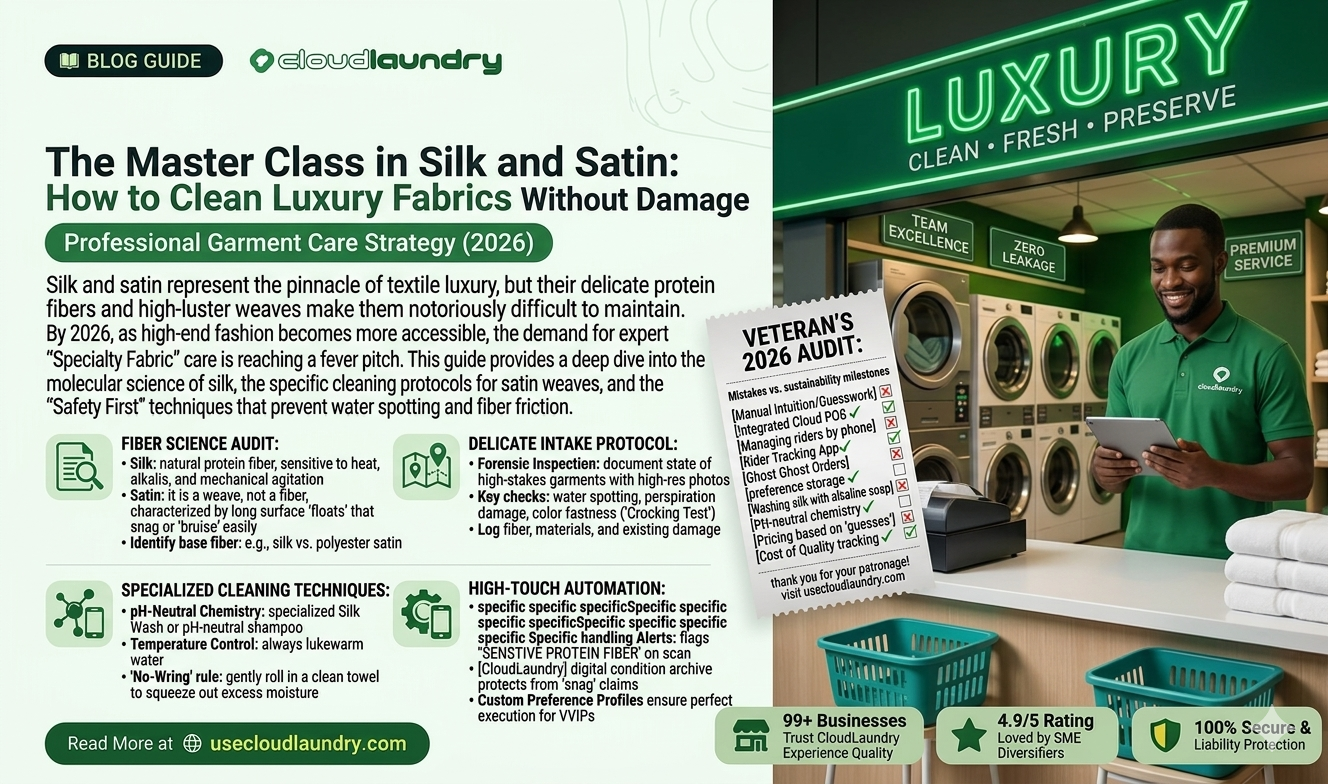
In the world of professional garment care, silk and satin are often treated with a mixture of reverence and fear. These materials are synonymous with luxury, from the flowing "Adire" silk pieces found in high-end Nigerian boutiques to the sleek satin evening gowns of international designers. However, unlike cotton or polyester, silk is a natural protein fiber chemically similar to human hair, making it extremely sensitive to heat, alkaline chemicals, and mechanical agitation.
By 2026, the resurgence of "Quiet Luxury" has led to a significant increase in silk and satin ownership among urban professionals. These customers are no longer satisfied with "Standard" dry cleaning; they are looking for specialists who understand the molecular integrity of their garments. For the laundry business owner, mastering the care of these fabrics is a gateway to the high-net-worth market. To ensure these delicate items are never misplaced or mismanaged, the best tool to manage your laundry business, CloudLaundry, offers precise item-level tracking and custom handling instructions that act as a digital safeguard for your most valuable orders.
Understanding the Fiber: Silk vs. Satin
Before a single drop of water or solvent touches the fabric, a professional must understand what they are holding.
The Molecular Reality of Silk: Silk is harvested from the cocoons of the Bombyx mori silkworm. Its strength comes from the protein fibroin, but its weakness is its susceptibility to “Fibrillation” where individual fibers break and create a fuzzy, white appearance that can never be fully repaired.
The Structural Reality of Satin: It is a common misconception that "Satin" is a fiber. Satin is a weave. It is characterized by long "floats" of yarn that sit on the surface to create a high luster. These floats are easily snagged or "bruised" by rough handling. While silk can be woven into satin, satin can also be made from polyester or acetate. Identifying the base fiber is the first step in the CloudLaundry intake process.
The "Safety First" Inspection Protocol
When a silk or satin item enters your facility, it must undergo a rigorous "Forensic Inspection." Because silk is so prone to permanent damage, documenting its state at intake is vital.
Key Inspection Points:
- Water Spotting: Silk is notorious for "water rings." Even clean water can displace the dyes or "sizing" (stiffening agents) in the fabric, leaving a permanent mark.
- Perspiration Damage: The salts in sweat can actually rot silk fibers over time. Look for yellowing or brittleness in the underarm areas.
- Color Fastness: Many silks are dyed with "reactive" dyes that bleed easily. A professional always performs a "Crocking Test"—rubbing a hidden area with a damp white cloth—before proceeding.
The Art of Hand-Washing Silk
While some silks are labeled "Dry Clean Only," many high-quality silks respond beautifully to expert hand-washing, provided the chemistry is correct.
The Hand-Wash Protocol:
- Temperature Control: Use lukewarm water. Hot water will shrink the fibers and destroy the luster.
- PH-Neutral Chemistry: Never use standard detergents, which are often alkaline. Use a specialized "Silk Wash" or a PH-neutral shampoo.
- The "No-Wring" Rule: Wringing silk snaps the protein bonds. Instead, lay the garment flat on a clean white towel and roll it up like a sleeping bag to gently squeeze out excess moisture.
Removing Stains without "Bruising"
Stain removal on silk is a surgical procedure. Mechanical action (scrubbing) is strictly prohibited.
Professional Spotting Techniques:
- The "Tamping" Method: Use a soft-bristle spotting brush to gently "tap" the stain from the back of the fabric into an absorbent pad.
- Oil Stains: Use a specialized degreaser that is safe for protein fibers. Do not allow the degreaser to dry on the fabric, as it can cause "Ringing."
- Alcohol Stains: Perfume and hairspray are the most common silk killers. They contain alcohol that can strip the dye. Immediate neutralization with a mild acidic solution is often required.
The Drying and Finishing Touch
The final 10% of the process is where the "Luxury Look" is restored.
Professional Finishing:
- Steaming vs. Ironing: Steaming is generally safer for silk and satin as it avoids direct metal-to-fiber contact. However, for a crisp finish, a "Cool Iron" on the reverse side with a pressing cloth is necessary.
- Restoring the Luster: If silk looks dull after washing, a final rinse with a tablespoon of white vinegar in cold water can help close the fiber cuticles and restore the shine.
- Storage: Silk should never be stored in plastic bags, which trap moisture and can lead to yellowing. Use breathable cotton garment bags.
Scaling Luxury Care with CloudLaundry
The problem with offering "Luxury Silk Care" is that it is time-consuming and requires extreme attention to detail. In a high-volume laundry, these delicate items can easily get "lost in the shuffle" of standard cotton loads. If a silk blouse is accidentally thrown into a high-heat dryer, the business faces not only a financial loss but a total collapse of customer trust.
This is where the best tool to manage your laundry business, CloudLaundry, becomes your most valuable asset. The platform is designed to handle the complexity of "Mixed-Load" operations:
Specific Handling Alerts: When a silk item is scanned into usecloudlaundry.com, it can be flagged with a "Red Alert." Every staff member who touches the order will see a popup: "SENSITIVE PROTEIN FIBER - HAND WASH ONLY."
Custom Preference Profiles: CloudLaundry remembers your premium customers' specific tastes. If a client prefers their silk saris folded instead of hung, the system ensures that instruction is followed every single time.
Digital "Condition" Archive: Attach high-resolution photos of the garment's luster and seams at intake. If a customer claims a "snag" later, you have the digital evidence to prove the state of the item when it arrived. By using CloudLaundry, you remove the "Human Error" from delicate fabric care. You can scale your luxury offerings without increasing your risk. It turns "Delicate Care" from a stressful chore into a streamlined, high-margin workflow. CloudLaundry gives you the confidence to say "Yes" to the most expensive garments in the city.
The "Satin Snag" Prevention Strategy
Satin weaves are incredibly prone to snagging during the cleaning process. Even a rough fingernail or a slightly burred machine drum can ruin a N300,000 dress.
Professional Safeguards:
- Net Bagging: Every satin item should be placed in its own individual mesh laundry bag before entering any machine (even for a "Delicate" cycle).
- Inside-Out Cleaning: Always turn satin garments inside out to protect the floating yarns on the "Face" of the fabric.
- Drum Inspection: A professional shop performs a daily "Silk Test" on their dryer and washer drums, running a pair of nylon stockings over the surface to feel for any nicks or burrs that could snag a satin floats.
Pricing the Risk and the Expertise
In 2026, you must price for the "Expertise" and the "Insurance," not just the labor.
Pricing Strategy for Luxury Fabrics:
The "Delicate" Surcharge: Silk and satin should always carry a 20% to 50% premium over standard items. This covers the additional time for hand-washing, specialized chemistry, and the higher insurance liability.
The "VIP" Tier: Offer a "Luxury Subscription" where silk and satin items are automatically handled by your most senior staff members.CloudLaundry helps you track the "Cost of Quality," ensuring that your premium pricing is backed by premium results and healthy margins.
Educating the Customer
Part of being a LaaS (Laundry-as-a-Service) leader in 2026 is acting as an advisor to your clients.
Content Marketing for Silk: Use your CloudLaundry newsletter to send "Silk Care Tips" to your subscribers. Teach them never to apply perfume while wearing silk or how to store their satin gowns during the humid months. When you educate the customer, you become the "Authority," making them less likely to ever consider a cheaper, less-informed competitor.
Conclusion: The Future is Delicate
The laundry industry of 2026 is moving away from "Mass Processing" and toward "Garment Conservation." As the fashion world embraces high-quality, long-lasting materials like silk and satin, the role of the laundry professional becomes that of a "Textile Guardian."
Mastering the science of protein fibers and the structural nuances of satin weaves is a significant investment in your professional skills. By combining this expertise with the technological power of the best tool to manage your laundry business, usecloudlaundry.com, you can build a business that is synonymous with luxury, trust, and flawless execution.
Don't let the fear of damage hold your business back. Equip your team with the knowledge they need and the software they deserve. Visit CloudLaundry today and see how CloudLaundry can help you master the art of the delicate. From the first scan to the final steam, we are with you every step of the way.