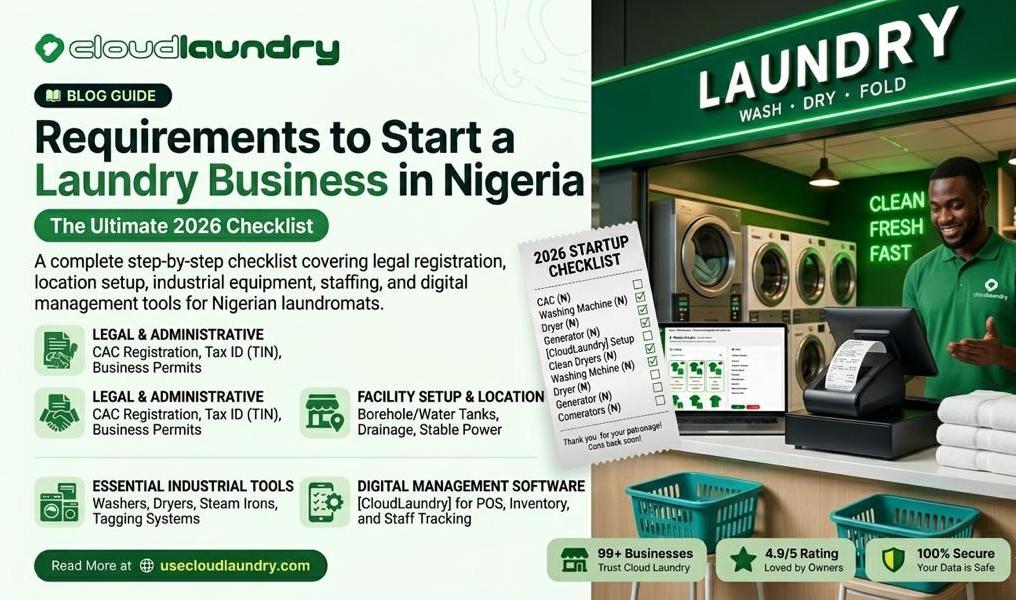
Starting a laundry business in Nigeria is an exciting venture, but it’s easy to get overwhelmed by the "to-do" list. Many entrepreneurs jump in by just renting a shop and buying a washing machine, only to realize later that they missed critical legal or operational steps.
In 2026, the bar for professional services in Nigeria has been raised. Customers are no longer looking for just a "washman"; they are looking for a reliable brand. To build that brand, you need to meet specific requirements: legal, physical, and digital. To help you navigate this, we have compiled the most comprehensive checklist for Nigerian laundry entrepreneurs. Whether you are in Lagos, Port Harcourt, or Abuja, these are the pillars you must build upon.
Legal and Administrative Requirements
Before you wash the first shirt, you must ensure your business is recognized by the law. Operating "under the radar" might save you a few naira today, but it will prevent you from getting corporate contracts or government grants tomorrow.
- CAC Registration: Registering your business name or company with the Corporate Affairs Commission (CAC) is non-negotiable. In 2026, you can choose between a Business Name (Sole Proprietorship) for about ₦15,000–₦25,000 or a Private Limited Company (Ltd) for ₦50,000+.
- Tax Identification Number (TIN): Once registered with the CAC, you must obtain a TIN from the Federal Inland Revenue Service (FIRS). This is required for tax compliance and is often generated automatically during CAC registration now.
- Local Government Permits: Depending on your state, you may need a "Business Premises Permit" or "Environmental Health" certificate. These ensure your shop meets hygiene and safety standards.
- Corporate Bank Account: Never mix personal and business funds. A corporate account allows you to track your real profit and builds trust with high-value clients.
Finding the Perfect Location
Your shop is your production line. In Nigeria, a laundry’s success is 70% location.
- Proximity to Target Market: Are you near residential estates, blocks of flats, or busy office hubs? You want to be where people are busy and have high disposable income.
- Reliable Water Source: Laundry is impossible without water. If your area has water issues, a borehole or a large GP tank (2,000 liters minimum) is a requirement. Ensure your plumbing can handle high-volume inflow and outflow.
- Power Supply and Backup: "NEPA" is a variable. A reliable generator (at least 5KVA to 10KVA) is essential to power your washing machines and industrial irons. In 2026, many smart owners are also investing in solar inverters for their lighting and POS systems.
Essential Equipment List (The Hard Assets)
To provide professional results, you cannot rely on domestic appliances. You need industrial-grade tools that can withstand 10+ hours of daily use.
- Industrial Washing Machines: Aim for at least one 10kg–15kg washer extractor. Brands like LG, Hisense, or Miele are popular in Nigeria.
- Tumble Dryers: You cannot rely on the sun in the rainy season. A dryer ensures a 24-hour turnaround time, which is a massive competitive advantage.
- Industrial Steam Irons & Vacuum Tables: Home irons leave "shine" on suits and Senator wears. A vacuum table sucks moisture out of the garment, leaving it perfectly crisp.
- Tagging Guns and Rollers: Never use a permanent marker on a customer's collar. Use professional tags to identify every item.
- Packaging Materials: Branded nylon bags, shirt boards, and hangers. Presentation is why people pay premium prices.
Human Resource Requirements
You might start as a "one-man-army," but as you grow, you will need a team.
- The Professional Washer/Dryer: Someone who understands fabric care, knowing the difference between silk, cotton, and "Aso-Oke."
- The Ironer (Presser): This is often the most important hire. A bad ironer can burn a ₦100,000 lace fabric in seconds.
- Front Desk/Manager: Someone to handle intake, check for existing stains, and issue receipts.
- Dispatch Riders: With the rise of "Laundry-on-Demand," offering pickup and delivery is almost a requirement for high growth.
The Digital Requirement (Management System)
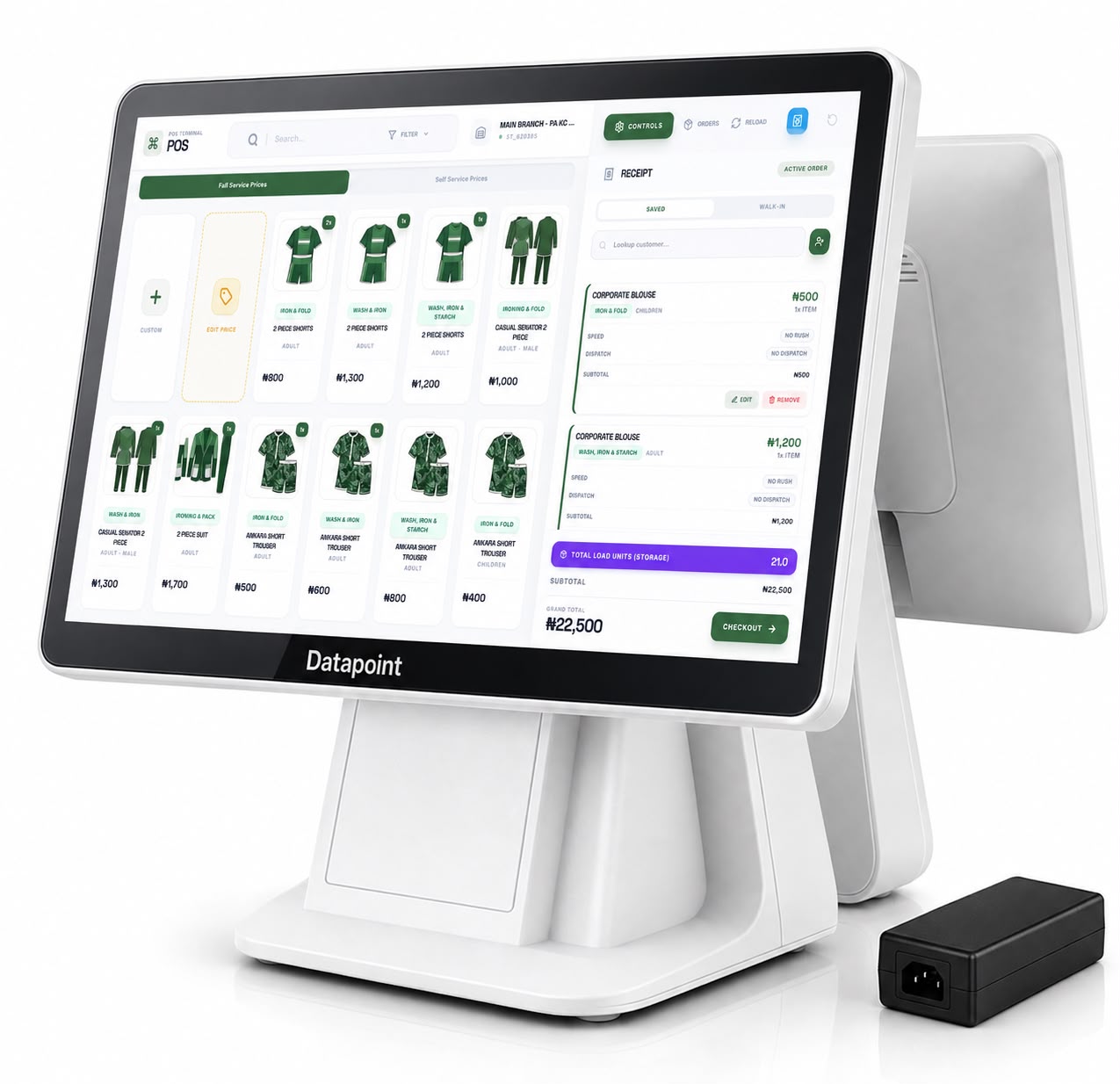
In 2026, a notebook is no longer a requirement, it’s a liability. If you are still using paper receipts, you are losing money to theft, errors, and disorganization. A modern laundry business requires:
- Digital POS: For transparent billing.
- Inventory Tracking: To ensure your staff isn't "diverting" detergent or nylons.
- Customer Database: To send birthday discounts and reminders.
- Shelf Management: To know exactly which rack a customer's suit is hanging on.
This is where CloudLaundry comes in. It is not just a software; it is the central brain of your operation.
Practical Example (The Abuja Startup)
Consider a startup in Gwarinpa, Abuja. They had the machines and the location, but they lacked a "system." During their first week, they misplaced three shirts belonging to a high-profile client. The "requirement" they missed wasn't equipment; it was organization.
By implementing CloudLaundry, they were able to assign every garment to a specific shelf in the system. When the client returned, they found the items in seconds. The automated WhatsApp receipt made the client feel secure, and the business avoided a costly compensation claim.
Why CloudLaundry is Your Most Important Requirement
Starting a business is hard; managing it shouldn't be. CloudLaundry is the best tool to manage your laundry business in Nigeria because it solves the problems that local owners face every day.
- Prevent Staff Theft: Monitor every transaction in real-time from your smartphone, even if you are not at the shop.
- Automate Communication: Send professional receipts and "Ready for Pickup" alerts via WhatsApp automatically.
- Inventory Control: Get alerts when your detergent or starch levels are low so you never have to turn a customer away.
- No Technical Setup: It’s cloud-based, meaning you don't need expensive servers. Just your phone or a tablet.
Without CloudLaundry, you are just washing clothes; with it, you are running a tech-enabled, scalable business.
Conclusion
Meeting the requirements to start a laundry business in Nigeria takes effort, but the rewards in 2026 are immense for those who do it right. By checking off your legal, physical, and digital boxes early, you set yourself up for a smooth, profitable launch. Don't let the technicalities scare you; the right tools make everything easier.
Ready to tick the most important box on your list? Visit usecloudlaundry.com and start managing your laundry like a pro today!