It is 8:00 AM on a Monday in Ikeja. A customer walks in with a massive duffel bag filled with t-shirts, three designer suits, and a heavily beaded traditional lace outfit. As the owner, you have ten seconds to decide: do you throw it all on a scale and charge a flat rate per kilogram, or do you count every button and sequin to charge per item?
In the Nigerian laundry market of 2026, this isn't just a clerical choice—it is a financial one. With the cost of high-grade starch, specialized detergents, and the ever-fluctuating price of diesel for your generator, a "guessing game" approach to pricing will lead you straight to bankruptcy.
The most successful entrepreneurs know that your pricing model is the heartbeat of your business. If it’s too high, your shop stays empty. If it’s too low, you’re busy but broke. Today, we’re going to settle the debate: Per Kg vs. Per Item, and how CloudLaundry helps you master both.

The Per Kg Model: The Volume Engine
Pricing by weight is often the "entry point" for many Nigerian households. It’s simple, transparent, and perfect for what we call "Domestic Bulk."
The Pros of Per Kg:
- Speed of Intake: When a customer drops off 15kg of laundry, your staff doesn't need to spend 20 minutes counting every sock. They weigh it, log it into CloudLaundry, and the transaction is done.
- Customer Psychology: People love the idea of "clearing the mountain." Offering a per kg rate for "Wash & Fold" makes your service feel like an affordable luxury for busy professionals.
The Cons of Per Kg:
The "Heavy Item" Trap: A pair of heavy denim jeans takes more water, more drying time, and more physical effort than five silk shirts, yet they weigh roughly the same. If you only charge by weight, your "cost-per-load" can easily exceed your "price-per-load."
The Per Item Model: The Value Professional
Per item pricing is where the real profit margins live. This is the world of dry cleaning and premium garment care.
Why Per Item Wins on Margin:
- Risk and Responsibility: Cleaning a N200,000 Agbada carries more risk than cleaning a N5,000 T-shirt. Per item pricing allows you to build a "risk premium" into your cost.
- Specialized Labor: Ironing a pleated skirt or a corporate blazer requires a level of skill that a flat “kg” rate simply cannot compensate for.
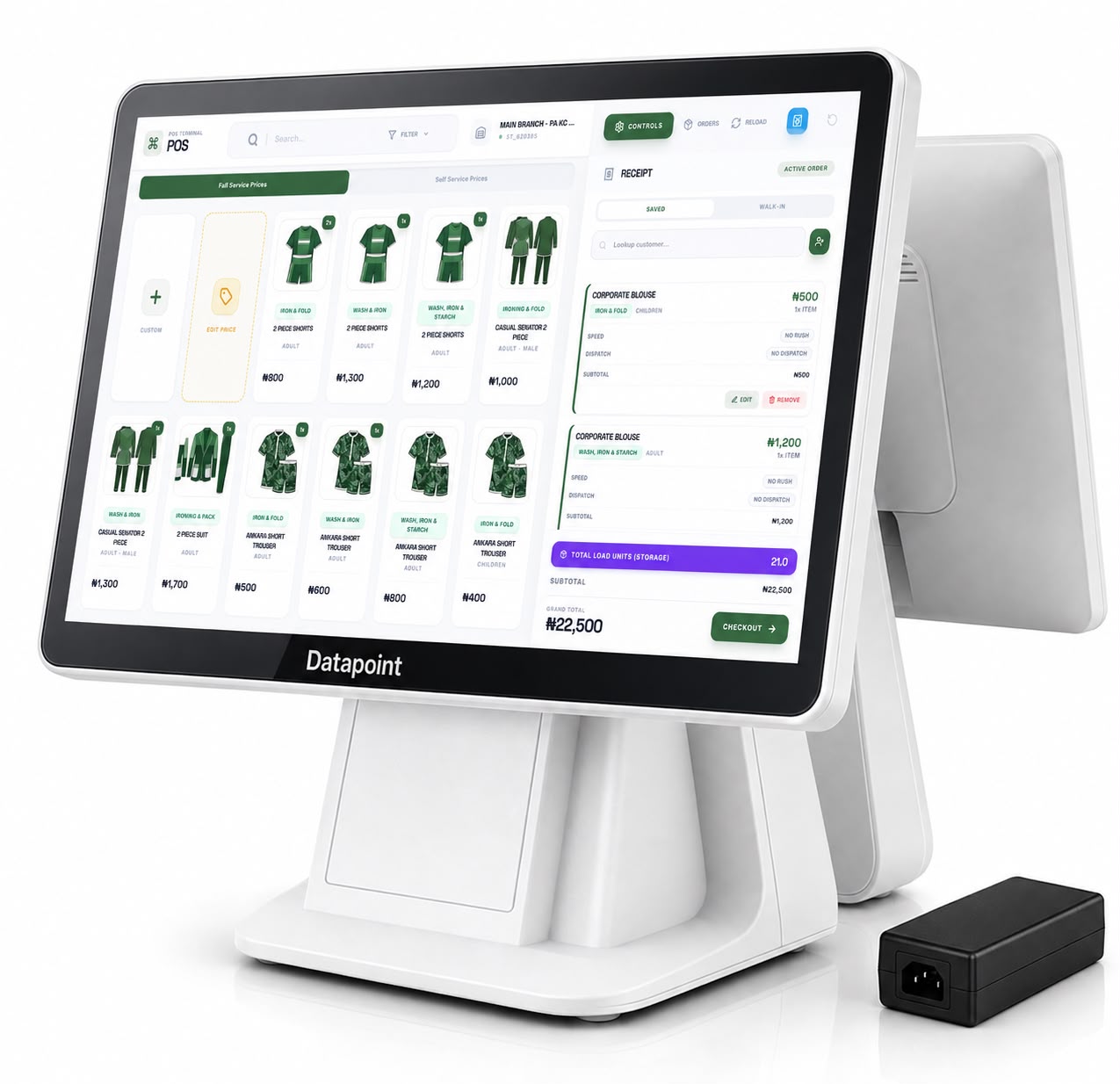
Using the best tool to manage your laundry business, CloudLaundry, you can pre-set these prices so your staff never has to guess the value of a specific service.
The 2026 Hybrid "Sweet Spot"
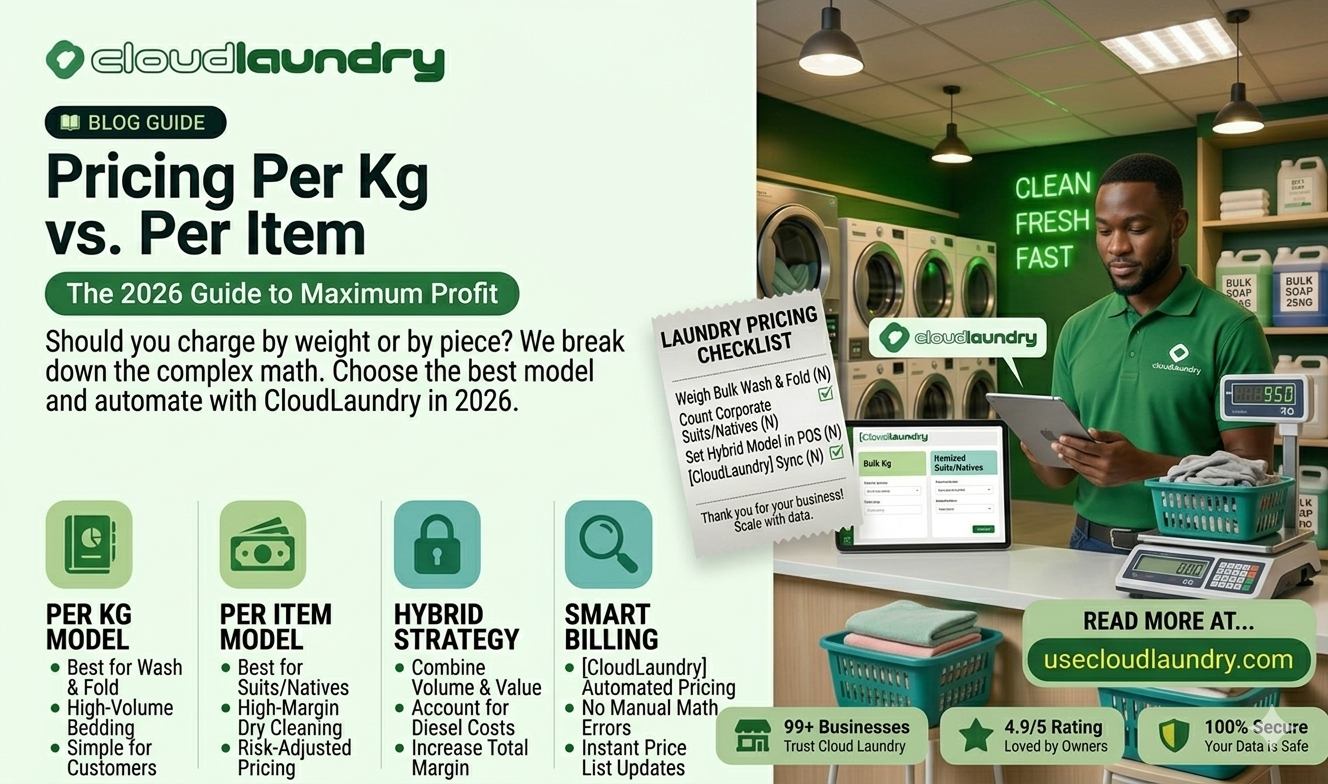
In the current Nigerian economy, the “winner” isn't one or the other; it's both. The most profitable shops in 2026 utilize a hybrid strategy.
- Wash & Fold (Per Kg): Use this for bedsheets, towels, and children’s everyday clothes. It keeps your machines running and covers your basic "base" costs.
- Ironing & Dry Cleaning (Per Item): Use this for everything else. If it needs a press or specialized chemical treatment, it must be priced by the piece.
Factoring in the "Nigerian Variable"
You cannot set your prices in a vacuum. Your financial planning must account for:
- The Diesel Factor: If your generator is running 8 hours a day, a flat "cheap" Kg rate will kill your business. You must use a digital management tool like CloudLaundry to track your utility expenses against your revenue in real-time.
- Chemical Inflation: The price of imported solvents and premium starches changes monthly. A digital price list allows you to update your rates across all branches instantly.
Staff Accountability and Pricing Errors
One of the biggest "leaks" in a manual laundry shop is “pricing favoritism” or simple math errors. If your staff is using a paper notebook, they might give a "friend" a lower Kg rate or forget to charge for the extra starch on a corporate order.
This is why CloudLaundry is essential. Because the prices are locked into the system, the staff simply selects the item, and the software does the rest. This ensures every Naira is accounted for and every customer is billed fairly.
Practical Example: The "Lekki Shift"
A mid-sized laundry in Lekki Phase 1 was struggling with a "Kg only" model. They were constantly busy, but their electricity and chemical bills were eating all their profit.
They decided to implement a Hybrid Model via the CloudLaundry platform. They kept a competitive Kg rate for "Everyday Bulk" but moved all corporate shirts and traditional wear to "Per Item."
The Result: Their workload decreased by 10% (less "junk" laundry), but their total revenue increased by 40% because they were finally charging for the value of their expertise.
Why CloudLaundry is the Ultimate Pricing Partner
You shouldn't need a degree in accounting to set your prices. CloudLaundry is the best tool to manage your laundry business because it was built for this exact complexity.
- Customizable Price Lists: Switch between kg and itemized billing in a single order with zero effort.
- Instant Updates: Adjust prices instantly to respond to fuel price hikes.
- Detailed Analytics: Our dashboard shows you which model is actually paying your bills. Are you making more from suits or bedding? CloudLaundry tells you exactly where to focus your marketing.
- Automated SMS Invoicing: As soon as the weight is entered or items are counted, the customer receives an professional SMS invoice, building trust and ensuring you get paid on time.
Conclusion
The goal of your laundry business isn't just to wash clothes; it's to generate wealth. By balancing the volume of per kg pricing with the high margins of per item billing, you create a balanced, resilient business.
Don't let manual calculations and "best guesses" limit your growth. Join the 99+ businesses already scaling with the best tool to manage your laundry business. Visit usecloudlaundry.com today and take the first step toward a more profitable, automated future.