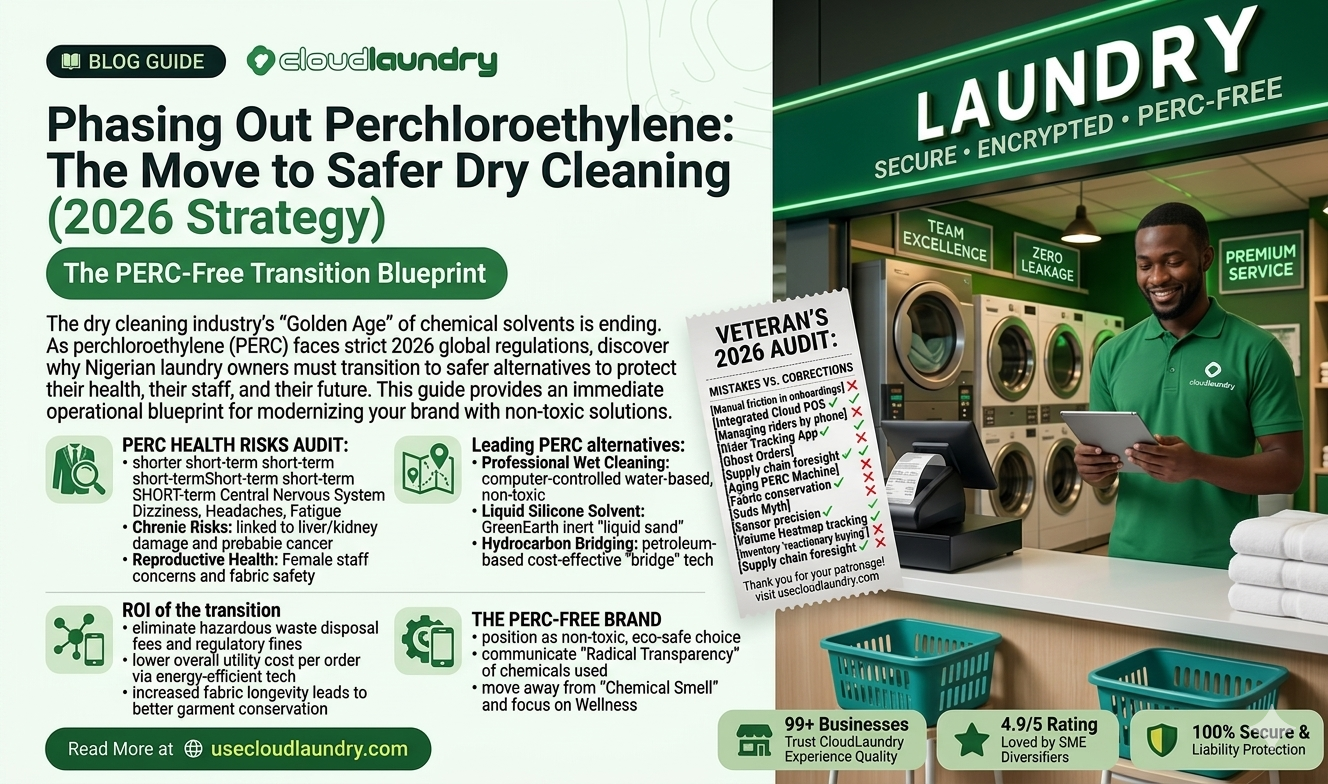
Since the mid-20th century, the dry cleaning industry has been built on a single, powerful chemical: Perchloroethylene, commonly known as "PERC." In the bustling dry cleaning hubs of Lagos, Abuja, and Port Harcourt, PERC has been the "magic bullet" for removing grease, oils, and stubborn stains without shrinking delicate fabrics. However, in 2026, the scientific and regulatory verdict is clear: the magic bullet is toxic.
Phasing out perchloroethylene dry cleaning is no longer a distant environmental goal; it is an immediate operational necessity. Global health organizations and environmental agencies (including the EPA and regional counterparts) have classified PERC as a probable human carcinogen. In many jurisdictions, 2026 marks the beginning of strict, multi-year phase-outs for existing PERC machinery. For the Nigerian laundry owner, continuing to use PERC without a transition plan is a significant liability. It endangers the health of your workers, contaminates local groundwater, and leaves your business vulnerable to sudden regulatory shutdowns.
The move toward "Safer Dry Cleaning" isn't just about avoiding fines it's about modernizing your brand for a health-conscious century. To manage this high-stakes transition and track your compliance with new safety standards, you need the best tool to manage your laundry business, CloudLaundry.
The Health and Environmental Cost of PERC
To understand why the industry is moving away from PERC, we must look at the damage it leaves behind. PERC is a Volatile Organic Compound (VOC) that evaporates easily, meaning it enters the body primarily through inhalation.
The Human Toll:
- Central Nervous System: Short-term exposure causes dizziness, headaches, and fatigue—symptoms often dismissed as "just a busy day" by Nigerian laundry workers.
- Chronic Risks: Long-term exposure is linked to liver and kidney damage, as well as an increased risk of bladder cancer and leukemia.
- Reproductive Health: PERC has been found in breast milk and is associated with fertility issues, making it a critical concern for female staff and customers alike.
- The Environmental Toll: PERC is heavier than water and incredibly persistent. When it leaks from old machines or is improperly disposed of in Nigerian drains, it sinks through the soil into the water table. A single liter of PERC can contaminate millions of liters of groundwater, rendering boreholes in your neighborhood unsafe for decades.
The Global 2026 Regulatory Landscape
While Nigeria’s specific chemical regulations are evolving, the "Global Phase-Out" is already affecting local supply chains. By 2026, many major manufacturers have stopped producing PERC-based machines entirely, and the cost of the solvent itself is skyrocketing due to environmental levies.
The Phase-Out Timeline: In many international markets, 2026 marks the "Point of No Return," where the installation of new PERC machines is prohibited. Existing machines are being placed on a 10-year "Sunset Schedule," with older, "vented" machines (3rd generation) being decommissioned first. For a Nigerian shop, buying a used PERC machine today is investing in "Stranded Assets" that may be illegal or impossible to service by the end of the decade. Use usecloudlaundry.com to audit your current equipment age and plan your capital reinvestment before the regulations tighten further.
The Leading Alternative: Professional Wet Cleaning
If we aren't using PERC, what are we using? The most significant movement in 2026 is "Professional Wet Cleaning."
How it Works: Unlike "Home Washing," professional wet cleaning uses sophisticated, computer-controlled machines and biodegradable detergents. It uses very small amounts of water to gently clean even "Dry Clean Only" items like wool, silk, and structured suits. The Benefits:
- Safety: 100% non-toxic and VOC-free.
- Fabric Quality: It removes organic stains (sweat, food, wine) much better than PERC ever could.
- Cost: The detergents are often cheaper than PERC, and there is no hazardous waste disposal fee.
Wet cleaning is recognized by the EPA and health advocates as the "Greenest" alternative to phasing out perchloroethylene dry cleaning.
Silicone-Based Solvents (GreenEarth)
For those who prefer a "Dry" solvent process, Silicone-based cleaning (often branded as GreenEarth) has become the gold standard in 2026.
The Science: This process uses liquid silicone (Decamethylcyclopentasiloxane or D5), which is essentially liquid sand. It is chemically inert, meaning it doesn't react with the clothes or the skin. Why it Wins:
Garment Feel: Clothes cleaned in silicone feel softer and look brighter than those cleaned in PERC.
Safety Profile: It is non-carcinogenic and non-toxic. When released into the environment, it simply breaks down back into sand, water, and CO2.
Marketing: Using the "GreenEarth" logo is a powerful way to signal to your customers that you have moved to a "PERC-Free" operation.
The ROI of the Transition
Switching away from PERC requires an initial investment in new machinery, but the ROI is found in three key areas:
- Lower Liability: You eliminate the risk of massive fines for soil contamination or worker compensation claims related to chemical exposure.
- Energy Efficiency: Modern wet cleaning and silicone machines use significantly less electricity and water than old 3rd or 4th generation PERC units.
- Premium Positioning: You can charge 15–20% more for "Non-Toxic, Eco-Safe Dry Cleaning." High-end clients in Lagos will happily pay for the peace of mind that their clothes don't smell like a chemical factory. CloudLaundry helps you track these premium margins to prove the business case.
Practical Case Study: The "Surulere Safety Shift"
A long-standing dry cleaner in Surulere, Lagos, was facing complaints from neighbors about "chemical odors" and was seeing a decline in staff health.
The Intervention: The owner decided to lead the local market in phasing out perchloroethylene dry cleaning. They replaced their aging PERC machine with a professional wet cleaning system and a high-efficiency hydrocarbon unit (a safer, petroleum-based alternative). They used CloudLaundry to notify their customers of the change.
The Result: Not only did the neighbor complaints stop, but the shop saw a 30% increase in orders for "Baby Clothes" and "Designer Silks" as customers realized the service was now safer. Their "Utility Cost per Order" dropped by 22% because the new equipment was vastly more efficient. The owner used usecloudlaundry.com to monitor the "New Customer" growth and confirmed that their "Green Reputation" was their biggest driver of revenue in 2026.
Tie into CloudLaundry Softly
Transitioning to a "PERC-Free" facility is a complex logistical task. You need to manage new chemical inventories, train staff on new machine cycles, and communicate the change to your database. This is where CloudLaundry acts as your transition partner.
As the best tool to manage your laundry business, usecloudlaundry.com allows you to log your "Chemical Safety Data Sheets" (CSDS) digitally, ensuring your shop is always audit-ready. The system’s "Staff Training" modules can be used to document that your team understands the new wet-cleaning protocols. Furthermore, CloudLaundry allows you to automate "Eco-Transparency" messages to your customers, explaining the health benefits of your new safer solvents. By tracking your "Chemical Spend" in the software, you can clearly see the financial benefits of moving away from expensive, regulated PERC.
Managing the "Solvent Smell" Expectation
Many older customers in Nigeria equate that sharp "Dry Cleaning Smell" with cleanliness. You must educate them that the smell is actually the scent of a toxic solvent that hasn't been properly aerated.
The Strategy: Explain that your new "Safer Dry Cleaning" methods leave clothes smelling like... nothing. Truly clean clothes don't have a chemical odor. Offer "Scent-Free" as a premium feature, and use your CloudLaundry marketing tools to share videos of the new, clear, liquid-sand solvents you are using.
The Safety of Hydrocarbon Solvents
While not as "Green" as wet cleaning or silicone, Hydrocarbon solvents are a popular "bridge" technology in the phase-out. They are petroleum-based but are much less toxic than PERC and do not carry the same carcinogenic risks. In 2026, many Nigerian shops are opting for Hydrocarbon as a cost-effective way to get "PERC-Free" status while still using a traditional dry solvent process. Use usecloudlaundry.com to track the performance of these solvents to ensure they meet your quality standards.
Conclusion: A Safer Future for Nigerian Laundry
The era of Perchloroethylene is coming to a close. For the Nigerian laundry industry, phasing out perchloroethylene dry cleaning is an opportunity to reset the standards of professional garment care. By moving to safer alternatives like professional wet cleaning and silicone-based solvents, you are protecting the people who make your business possible your staff and your customers.
The businesses that thrive in the 2020s and beyond will be those that prioritize health and safety over "business as usual." Don't wait for a law to force your hand; make the change today for the right reasons.
Combine your commitment to safety with the digital intelligence of CloudLaundry to build a business that is as healthy as it is profitable. Visit usecloudlaundry.com today and let us help you lead the way to a "PERC-Free" future. The future of dry cleaning isn't just dry it's safe.