In the Nigerian laundry business, many owners think that to grow, they simply need more washing machines. However, a shop with ten machines and a messy workflow will often produce less profit than a shop with five machines and a perfectly optimized “assembly line.”
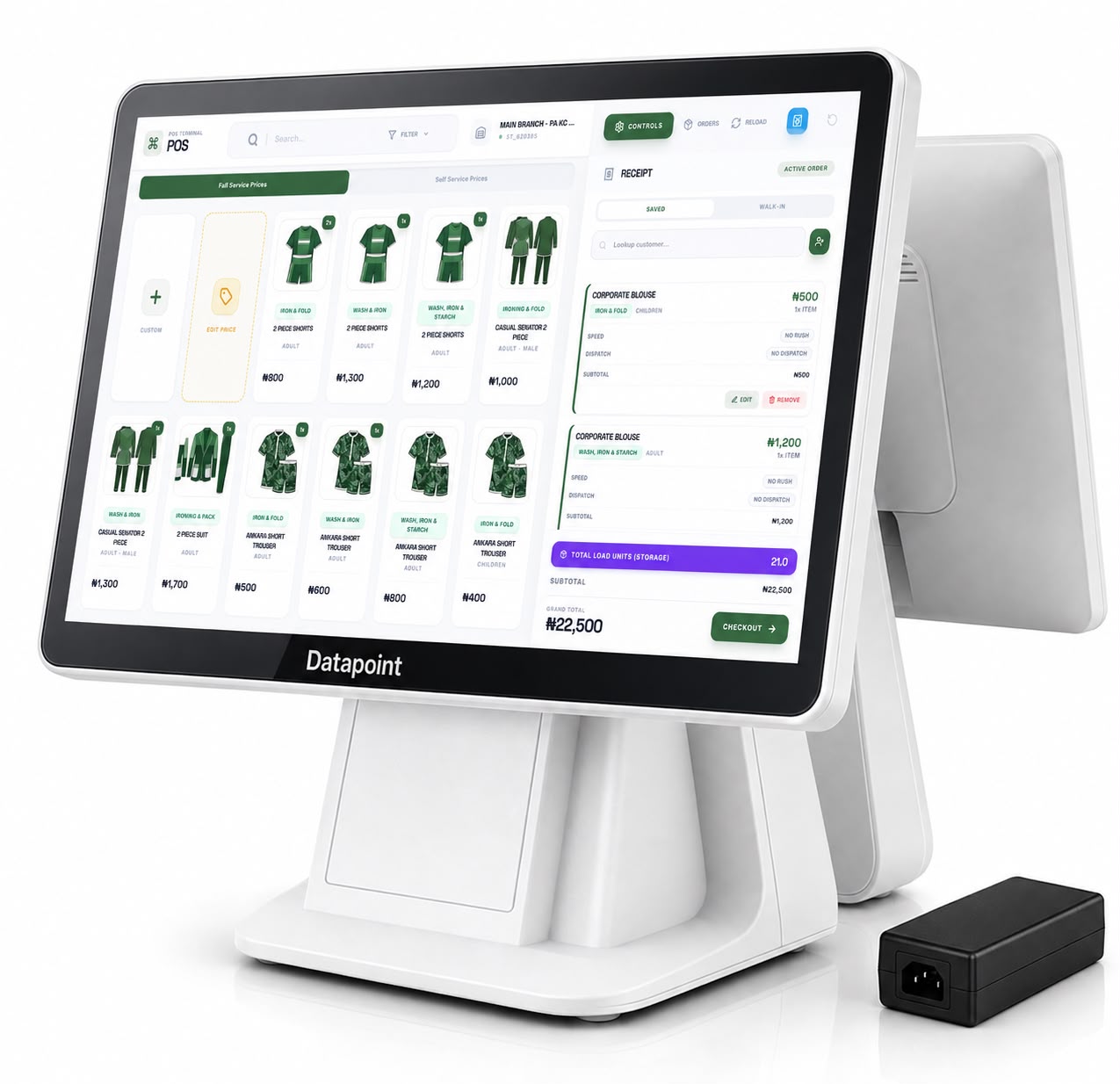
Workflow optimization is the art of moving a garment from the customer’s hands to the finished rack with the absolute minimum number of touches, steps, and delays. In 2026, where labor and energy costs are at an all-time high, every unnecessary movement is a drain on your bank account. To truly compete, you must stop treating laundry as a series of chores and start treating it as a manufacturing process. This guide will show you how to use the best tool to manage your laundry business, CloudLaundry, to turn your shop into a high-speed production engine.
Physical Layout: The "U-Shape" vs. The "Linear" Flow
The way you arrange your tables and machines determines how much time your staff wastes walking.
- The Problem: In many Nigerian shops, the sorting table is far from the washers, and the ironing boards are right next to the dirty clothes intake. This causes "cross-contamination" and wasted steps.
- The Optimization: Design a "U-Shaped" workflow. The entrance/intake is at one end of the 'U', moving to sorting, then washing, then drying, then pressing, and ending at the pickup rack—which sits right back at the front desk.
- The Result: Clothes move in one direction and never "backtrack." Your staff spends less time walking and more time working.
The "Intake-to-Sorting" Bottleneck
Sorting is where most laundry businesses lose their momentum.
- The Strategy: Sort by "Treatment Type," not just color. Group items that need "Heavy Starch," "No Steam," or "Gentle Cycle" immediately upon arrival.
- Digital Tagging: Use CloudLaundry to print or assign digital tags at the intake. When the sorter sees a digital "VIP" or "Express" flag on the tablet, they know to move that item to the front of the line instantly.
- The Pre-Treat Station: Place a small stain-removal station right at the sorting table. Treating a stain before it goes into the wash is 10x more efficient than realizing it’s still dirty after it comes out of the dryer.
Balancing the "Wash-Dry-Press" Ratio
The biggest bottleneck in a laundry shop is usually the ironing board. A washer takes 40 minutes, and a dryer takes 45 minutes, but pressing a basket of shirts can take two hours.
- The Optimization: You must calculate your “throughput.” If you have three washers but only one ironer, your washers will eventually stop because there is no space to put the clean clothes.
- The Fix: Use CloudLaundry to track "Work-in-Progress." If the system shows 50 items are "Cleaned" but 0 are "Pressed," you know you need to move a staff member from the washing area to the pressing area to clear the backlog.
Eliminating the "Searching" Time
How many times have you seen a staff member holding a single sock and asking everyone, "Who does this belong to?"
- The Bundle Method: Use small mesh bags for socks and undergarments for every individual customer.
- Digital Rack Tracking: With CloudLaundry, every garment is linked to a customer profile and a specific rack location. When an item is finished, the staff member clicks "Mark as Ready" and places it on the assigned rack. The system knows exactly where every shirt is at every second.
The "Batching" Power Hour
Efficiency is found in repetition.
- The Strategy: Avoid switching between different types of garments every ten minutes. Instead, implement “batching.” Have a "Duvet Hour" or a "White Shirt Window."
- The Logic: When a staff member irons 20 white shirts in a row, they get into a rhythm. Their speed increases, the iron temperature stays consistent, and the quality is higher than if they were constantly switching between jeans and lace.
Standardizing the "Finish"
Efficiency is killed by "re-dos." If a customer rejects a shirt because the starch is too soft, you have to redo the work for free.
- Standard Operating Procedures (SOPs): Use CloudLaundry to store customer preferences. If the tablet says "Customer prefers no starch," the presser sees it before they even pick up the iron.
- The QC (Quality Control) Checkpoint: Designate one person (or use a rotation) to do a 5-second check on every finished item. "Is it clean? Is it crisp? Is it tagged correctly?" Catching an error before the customer arrives saves hours of apology and rework.
Maintenance as a Workflow Tool
A machine that breaks down on a busy Saturday doesn't just stop the wash; it breaks the entire workflow.
- Preventative Maintenance: Schedule deep cleans for your machines during "off-peak" hours (usually Monday mornings).
- Inventory Readiness: Use the automated inventory alerts in CloudLaundry to ensure you never run out of hangers or polybags. Searching for a hanger in the middle of a rush is a major efficiency killer.
Managing the "Human Element"
Workflow is not just about machines; it’s about people.
- Ergonomics: Ensure your ironing boards are at the correct height and your sorting tables have good lighting. A tired, uncomfortable staff member is an inefficient one.
- Accountability Dashboards: Show your staff the CloudLaundry dashboard. When they see the "Orders Pending" count dropping in real-time, it creates a sense of accomplishment and healthy competition.
Case Study: The "Surulere Speed-Up"
A laundry business in Surulere was struggling with a 5-day turnaround time. They implemented the "U-Shape" layout and started using CloudLaundry to track their production stages. By identifying that their “drying” stage was the bottleneck, they added one more dryer and trained staff on better sorting. Within 3 weeks, their turnaround time dropped to 48 hours, and their capacity increased by 50% without hiring a single new person.
Why CloudLaundry is the "Orchestrator" of Efficiency
You cannot optimize what you cannot see. CloudLaundry provides the visibility needed to run a lean operation:
- Stage Tracking: See exactly how many items are in 'Received', 'Washing', 'Ironing', or 'Ready'.
- Employee Productivity: Monitor who is processing the most orders.
- Bottleneck Identification: The system flags orders that have been in the same stage for too long.
- Automated Customer Updates: Free up your front desk by letting the system handle all "Is my cloth ready?" inquiries.
Conclusion: Small Tweaks, Big Profits
Workflow optimization is not a one-time event; it is a habit. By constantly looking for small ways to reduce "touches" and eliminate delays, you build a business that is faster, cheaper to run, and more profitable.
The future of the Nigerian laundry industry belongs to those who value speed and precision. Are you ready to optimize your way to the top? Visit usecloudlaundry.com and discover how our digital tools can help you master your workflow and dominate the market in 2026.