Most laundry owners in Nigeria focus 100% of their energy on getting more customers. While revenue is important, what you keep is more important than what you make. One of the biggest drains on a laundry shop’s profitability is poor inventory management.
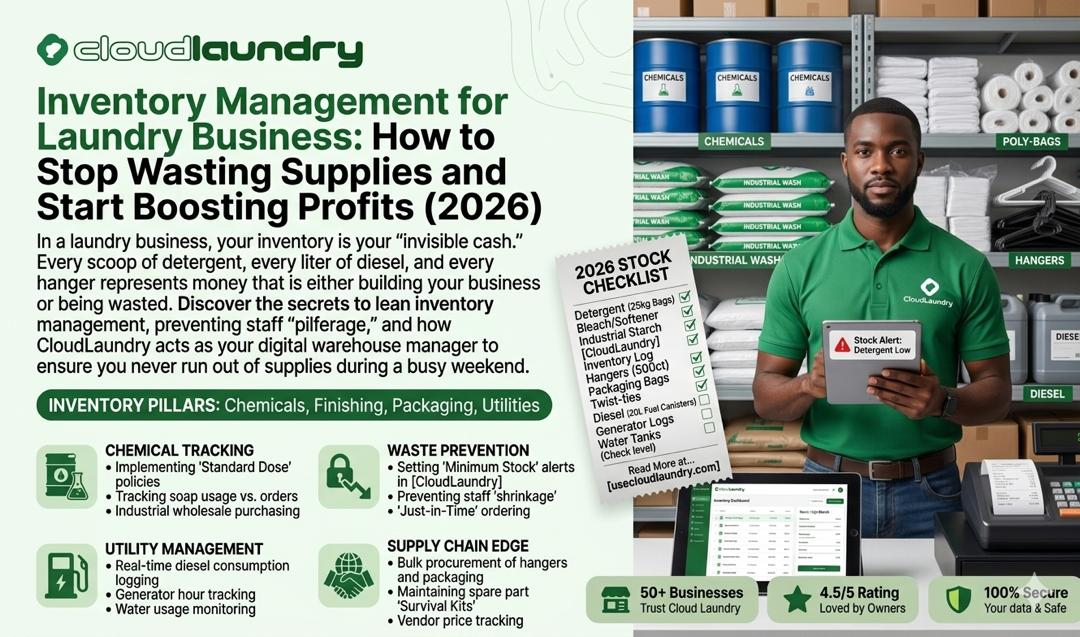
Inventory in a laundry business isn't just about the clothes on the rack; it’s about the "consumables": the detergents, the industrial starches, the poly-bags, the hangers, and most importantly in the Nigerian context, the diesel. When these items are not tracked, they "disappear." A scoop of detergent here, a few hangers there, and a liter of diesel "borrowed" for a home generator it all adds up to hundreds of thousands of Naira in lost profit every year. In 2026, successful owners are using the best tool to manage their laundry business, CloudLaundry, to turn their inventory from a headache into a high-precision asset.
The Five Pillars of Laundry Inventory
To manage your stock effectively, you must categorize it. In a professional laundry setup, you have four main types of inventory:
- Chemicals & Detergents: Wash soaps, bleach, fabric softeners, and specialized stain removers.
- Finishing Supplies: Starch (liquid and powder), hangers (wire and wooden), and collar stays.
- Packaging Materials: Polybags, garment covers, branded stickers, and twist ties.
- Utilities: Diesel for the generator and water (if buying by the tanker).
By categorizing these in your CloudLaundry system, you can track the "usage rate" for each category independently, allowing you to see exactly where your money is going.
The “Standard Dose”: Preventing Chemical Waste
The biggest myth in the laundry room is that "more soap means cleaner clothes." This leads to staff using double the required detergent, which doesn't just waste money—it can actually damage the machines and leave residues on customer clothes.
- The Solution: Implement a “standard dosing” policy. Use measuring cups for everything.
- The Training: Train your staff that for a 10 kg load, they use exactly two scoops.
- The Digital Link: With CloudLaundry, you can compare your "Orders Processed" against "Inventory Consumed." If you processed 100 loads but used 300 loads' worth of soap, you have found a major leak in your profit.
Diesel Management: Tracking the "Litre-per-Load"
In Nigeria, diesel is often the second-highest expense after labor. Because it is so valuable, it is also the item most likely to be stolen or mismanaged.
- The Logbook Method: Every time the generator is turned on, the start time, end time, and current fuel level must be logged.
- The Digital Audit: Use CloudLaundry to track your utility expenses. If your diesel spend is rising but your revenue is flat, it’s time to investigate your generator’s health or your staff’s integrity.
The "Just-in-Time" vs. "Safety Stock" Strategy
Running out of hangers or detergent on a Friday afternoon is a disaster. It forces you to buy from local retailers at "emergency prices," which are often 30-50% higher than wholesale prices.
- Safety Stock: Always keep a 2-week "buffer" of essential items.
- Automated Alerts: This is where CloudLaundry shines. You can set "Minimum Stock Levels" for every item. When your hanger count drops to 200, the system sends you an alert on your phone. You can then place a wholesale order before you reach zero, ensuring you always get the best price.
Preventing "Internal Leakage" (Shrinkage)
"Shrinkage" is the polite word for staff theft. In a manual shop, it is easy for a staff member to take a handful of hangers or a bottle of detergent home.
- The "Locked Stock" Policy: Keep your main inventory in a locked cupboard or room. Only the manager should have the key.
- Daily Rationing: At the start of the day, issue the amount of soap and hangers needed for that day’s projected volume.
- Inventory Reconciliation: Once a week, do a physical count of your stock and compare it to the "Expected Stock" in your CloudLaundry dashboard. Any discrepancy must be explained.
Packaging as a Brand Asset
Your polybags and hangers are the "packaging" of your product. If you run out and start returning expensive suits in cheap, unbranded plastic, you are damaging your brand reputation.
- The Strategy: Treat branded packaging as high-value inventory.
- Inventory Tracking: Use [CloudLaundry] to track your usage of branded bags. This helps you plan your printing orders months in advance, allowing you to negotiate better rates with printers for larger volumes.
Wholesale Procurement and the Power of Bulk
The most successful laundry businesses in Nigeria don't buy from the market; they buy from the source.
- The Economics: Buying industrial detergent in 25kg bags is significantly cheaper per load than buying 1kg bags.
- Cash Flow Management: Use your CloudLaundry revenue reports to identify when you have the most cash on hand to make bulk inventory purchases. Buying a 3-month supply of hangers at once can save you up to 20% in costs.
Equipment Spare Parts as Inventory
A broken belt on a washer can shut down your business for two days while you look for a replacement in Mushin or Eagle Square.
- The Essential Spares: Keep a "Survival Kit" of common spare parts—belts, fuses, and water inlet valves.
- Tracking Repairs: Log every spare part used in [CloudLaundry]. This helps you see if a particular machine is becoming a “money pit” that needs to be replaced rather than repaired.
Case Study: The "Surulere Savings"
A medium-sized laundry in Surulere noticed that their “misc. expenses” were eating 15% of their profit. After implementing the CloudLaundry inventory module, the owner realized they were over-ordering starch and under-tracking hangers. By moving to bulk purchasing and setting digital “re-order alerts,” they reduced their supply costs by N85,000 per month, enough to pay the salary of a new staff member.
Why CloudLaundry is Your Digital Warehouse Manager
Managing inventory manually is exhausting and prone to errors. CloudLaundry is the best tool to manage your laundry business because it integrates your sales data with your supply data:
- Real-time Consumption Tracking: Know exactly what you used today.
- Low Stock Notifications: Never get caught by surprise again.
- Vendor Management: Store your suppliers' contact details and price history in one place.
- Expense Analytics: See a clear pie chart of your detergent vs. diesel vs. packaging costs.
Conclusion: Small Savings, Big Future
Inventory management isn't just about counting soaps; it's about a disciplined mindset. In the Nigerian economy of 2026, where costs are constantly fluctuating, the laundry owner who controls their inventory is the one who survives the lean months and thrives during the peak seasons.
Don't let your profits "wash away" through waste and theft. Take control of your stockroom and your bank account today. Visit usecloudlaundry.com and see how our digital tools can help you master your inventory and scale your laundry brand with confidence.