Many laundry owners in Nigeria start as "ghost businesses." They operate from a shop or a backyard without a single government paper. While this might save you a few thousand Naira in the first month, it is the quickest way to kill your growth. In 2026, a registered business isn't just a legal requirement; it is a badge of trust.
Without registration, you cannot open a corporate bank account, you cannot apply for SME loans from the Bank of Industry (BOI), and you cannot sign contracts with hotels or corporate offices that need their staff's uniforms cleaned. If you want to be treated like a professional, you must act like one. This guide explains exactly how to register a laundry business in Nigeria from start to finish.
Choosing Your Business Structure (CAC)
The Corporate Affairs Commission (CAC) is the body responsible for all business registrations in Nigeria. You generally have two choices:
Business Name (Sole Proprietorship):
- Best For: Small startups with one owner.
- Pros: Cheapest to register (around ₦10,000 - ₦15,000 official fee), simpler tax filings.
- Cons: You and the business are legally the same person; if the business owes money, your personal assets are at risk.
Private Limited Company (Ltd):
- Best For: Entrepreneurs planning to scale, take investors, or open multiple branches.
- Pros: Limited liability (your personal money is safe); looks more "prestigious" to corporate clients.
- Cons: More expensive to register (₦50,000+) and requires annual returns filing.
The Step-by-Step CAC Process
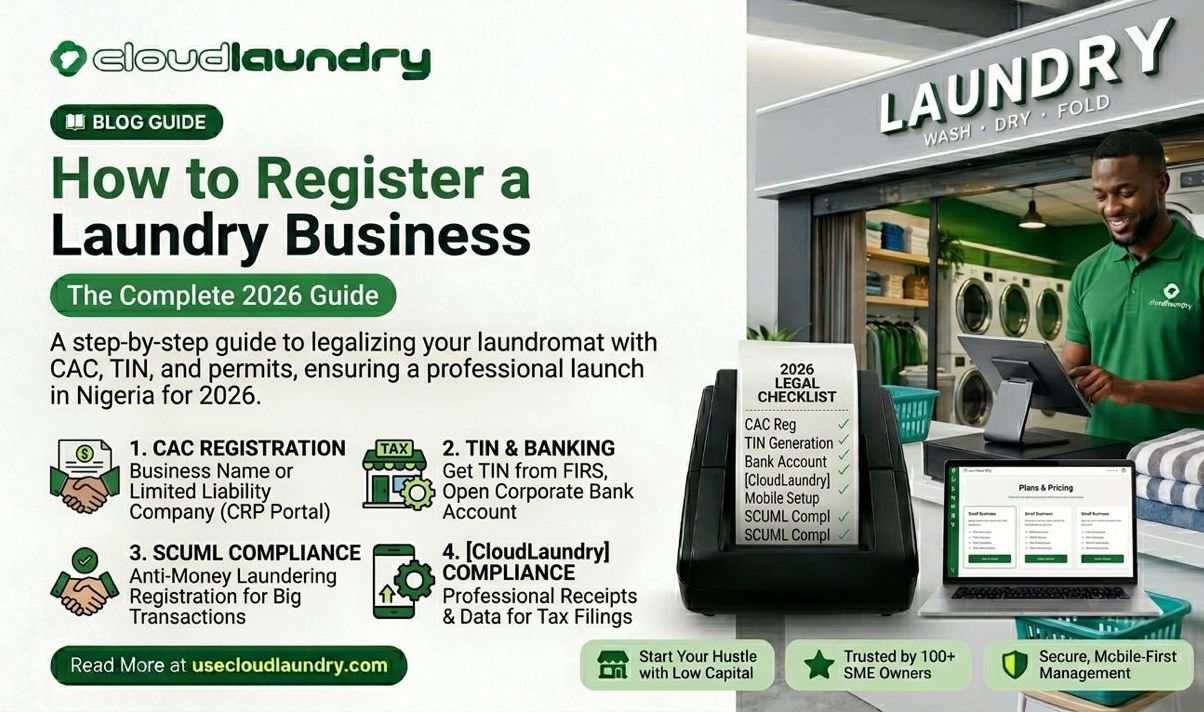
In 2026, the process is fully digital via the CAC CRP (Companies Registration Portal).
- Step 1: Name Availability Search: Submit two unique names (e.g., "CleanStream Laundry Ltd" and "StreamClean Dry Cleaners"). Avoid generic names that others already use.
- Step 2: Reservation: Once a name is approved, it is reserved for 60 days.
- Step 3: Registration Details: You will need to provide valid IDs (NIN is best), passport photographs, and the address of your laundry shop.
- Step 4: Payment and Submission: Pay the filing fees and stamp duties online.
- Step 5: Certificate Download: Once approved, your Certificate of Incorporation and Status Report are sent to your email. No more waiting for months at a physical office!
Post-Registration Essentials (TIN & Bank)
Registration doesn't end with a certificate.
- Tax Identification Number (TIN): In 2026, the FIRS usually generates a TIN automatically once your CAC is complete. You need this for all tax-related matters.
- Corporate Bank Account: Take your CAC documents to any Nigerian bank and open a "Business Account." This is the only way to process large corporate payments and look professional to your customers.
- SCUML Registration: If you plan on handling large transactions, you may need to register with the Special Control Unit Against Money Laundering (SCUML).
Local Government and Environmental Permits
Because laundry businesses use chemicals (detergents, solvents) and produce wastewater, you are subject to environmental checks.
- Environmental Health Permit: Your local government will inspect your shop to ensure your drainage doesn't pollute the neighborhood.
- Business Premises Permit: A yearly fee paid to the state government for the right to operate a physical shop in that state.
- Waste Management (LAWMA/Equivalent): You must be registered with the official waste disposal body in your area to handle the disposal of chemical containers and packaging waste.
The "Digital Compliance" Requirement
Registering with the government protects your name, but registering with a management system protects your money. In 2026, the "Business Registration" process should include setting up your digital workflow.
A registered business that still uses a "paper notebook" is like a brand-new Mercedes being pulled by a horse. To truly professionalize your newly registered entity, you need a system that matches your legal status.
Practical Example (The "Unregistered" Disaster)
Consider a laundry startup in Lagos that is landing a contract to wash curtains and linens for a mid-sized hotel. The hotel asked for their CAC certificate and a corporate bank account to process the ₦1.5 million payment.
The owner, who had been operating "informally" for two years, didn't have these. By the time they tried to rush the registration, the hotel had given the contract to a smaller, but registered, competitor. They didn't lose the job because they couldn't wash well; they lost it because they weren't legal.
Shortly after, they registered and implemented CloudLaundry. Now, their digital receipts carry their CAC "RC Number," giving every customer immediate confidence that they are dealing with a legitimate company.
How CloudLaundry Completes Your Business Setup
CloudLaundry is the best tool to manage your laundry business in Nigeria because it bridges the gap between "Legal Registration" and "Professional Operation."
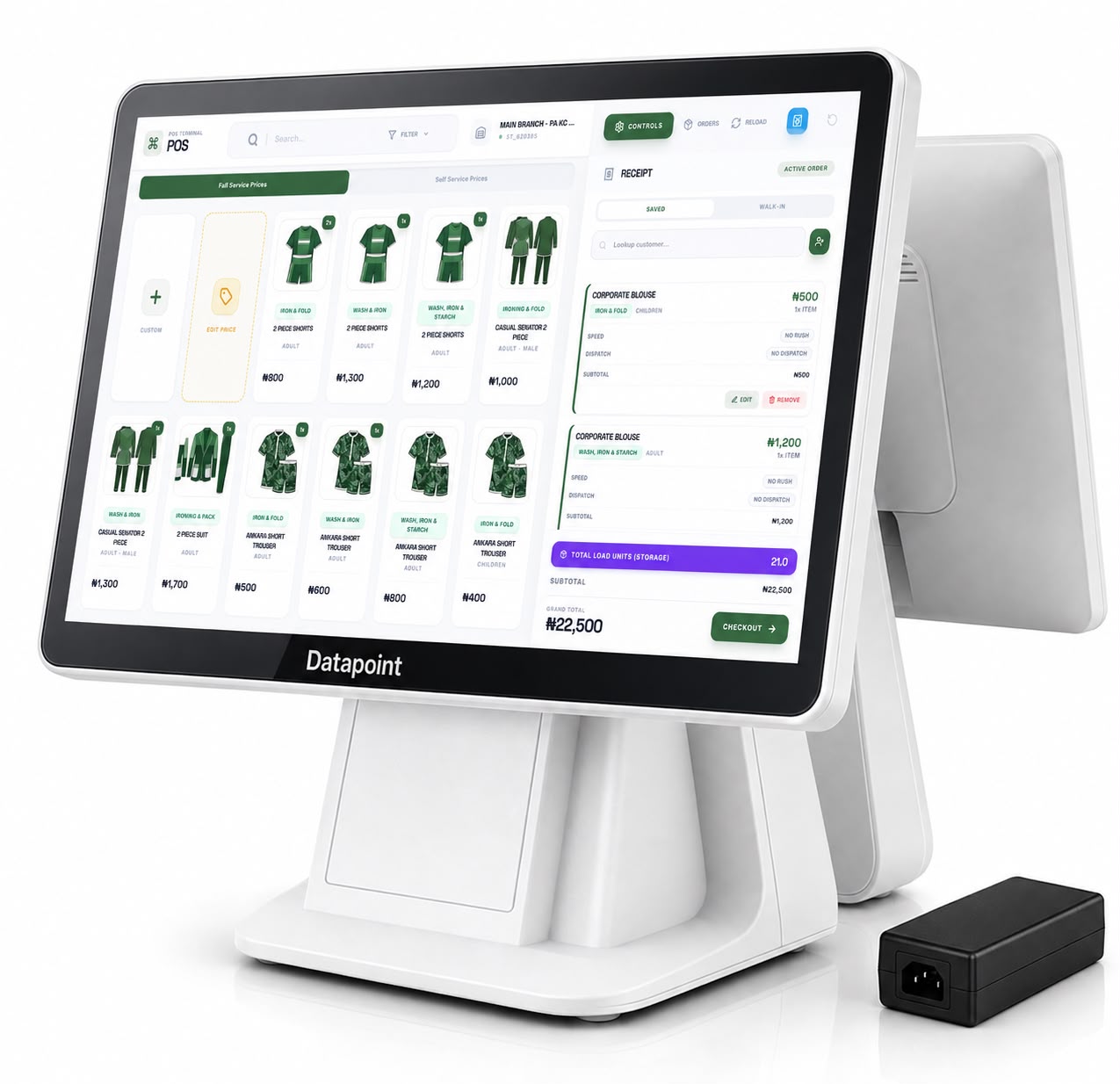
- Professional Receipts: Once registered, you can add your CAC number and business address to every digital receipt sent via CloudLaundry.
- Auditable Records: If you ever need a bank loan for equipment, the reports generated by our software serve as proof of your business's health.
- Compliance Made Easy: We help you track your sales so that when it’s time to pay your local government permits or taxes, you have accurate data at your fingertips.
A CAC certificate makes you a business in the eyes of the law; usecloudlaundry.com makes you a business in the eyes of your customers.
Conclusion
Registering your laundry business in Nigeria is a non-negotiable step for anyone serious about success in 2026. It protects your brand name, opens doors to big contracts, and forces you to build a structured organization. Don't wait until you "get big" to register; register so that you can get big.
Ready to turn your hustle into a corporate brand? Visit usecloudlaundry.com and start your professional journey today!