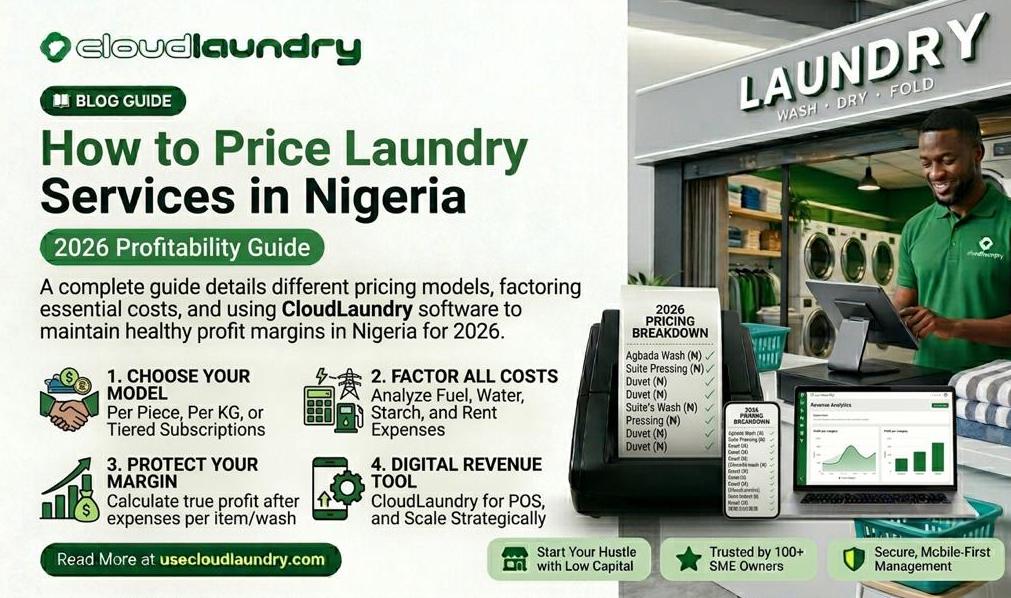
In the 2026 Nigerian economy, "guessing" your prices is the fastest way to go out of business. With the fluctuating price of fuel for generators, the rising cost of industrial starch, and increasing shop rents, a price list that worked six months ago might be making you a loss today.
Many laundry entrepreneurs in Nigeria look at what the "shop next door" is charging and simply copy them. But what if the shop next door doesn't pay rent? What if they use inferior detergents? Your pricing must be a reflection of your costs and your value. This guide explains exactly how to price laundry services in Nigeria to ensure you stay competitive while protecting your bottom line.
The Three Main Pricing Models
There is no "one size fits all" for Nigeria, but most successful laundries use one of these:
1. Per-Piece Pricing (The "Dry Cleaning" Standard)
Best For: High-value items like suits, agbadas, wedding gowns, and senators.
Why it works: These items require individual attention, specialized pressing, and premium packaging. Customers expect to pay a "per unit" price for the risk and care involved.
2. Per-Kilogram (KG) Pricing (The "Wash & Fold" Trend)
Best For: Everyday wear, bedsheets, towels, and children’s clothes.
Why it works: It’s faster for the staff and feels like a "deal" for the customer. It is excellent for building volume during slow periods.
3. Tiered Subscription Models (The 2026 Innovation)
Best For: Busy professionals and families.
Why it works: You offer a "Bronze, Silver, or Gold" monthly plan (e.g., ₦30,000 for 40 items). This ensures predictable monthly income, the holy grail of Nigerian business.
Factors That Must Dictate Your Price
Before you print that price list, calculate these "Hidden Four":
- The "Generator" Tax: Calculate how much fuel you use per hour and divide it by how many clothes you iron in that hour. If fuel goes up, your "Express" service price should reflect it.
- Chemical Quality: Are you using premium industrial starch or local alternatives? Quality costs more; don't be afraid to charge for it.
- Location Premium: A laundry in Maitama, Abuja, should not have the same price list as a laundry in a suburban area. Charge based on the average purchasing power of your neighborhood.
- Logistics: If you offer pickup and delivery, is it “free” (built into the price) or a flat fee? In 2026, most customers prefer a flat delivery fee of ₦500–₦1,500.
The "Express" Service Premium
Time is money. In cities like Lagos, people are often in a rush.
- Standard (3-4 Days): Base Price.
- Express (24 Hours): Add 50% - 100% to the base price.
- Same Day: Add 150%. This doesn't just increase profit; it helps you prioritize your workflow during busy periods.
Dealing with Price Haggling
Nigerians love to negotiate. However, a professional laundry shouldn't be a "market square."
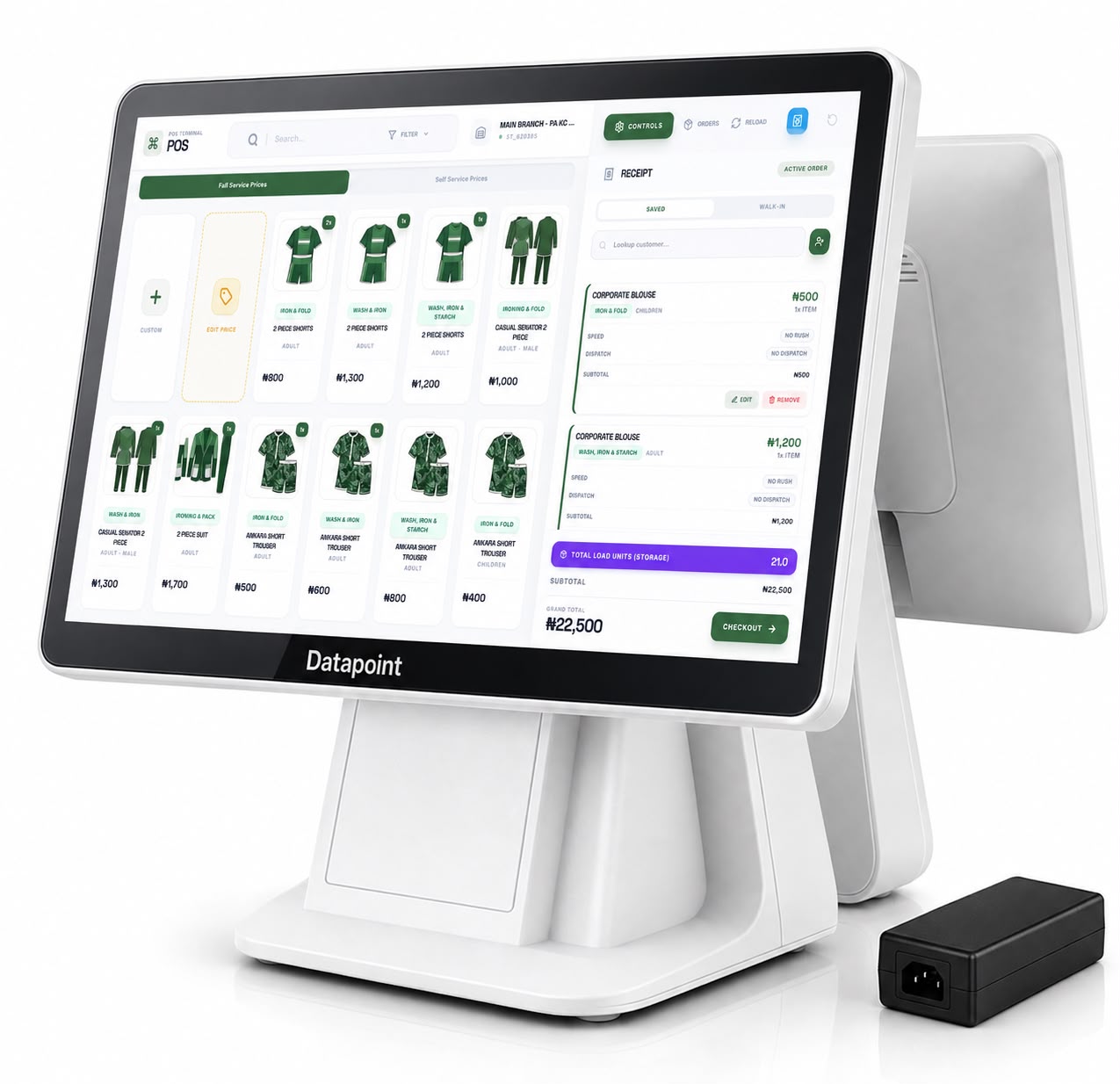
The Solution: A fixed, professional digital price list sent via WhatsApp from CloudLaundry. When a price is "in the system," customers are less likely to ask for a discount.
The "Discount" Strategy: Instead of lowering prices, offer "Loyalty Points" or "10th Wash Free." This keeps the customer coming back without devaluing your work.
The "Digital Receipt" Psychological Effect
There is a psychological link between how a customer receives their bill and how much they are willing to pay.
A handwritten note on a scrap of paper makes a ₦3,000 charge feel "expensive."
A professional digital receipt from CloudLaundry showing the breakdown of items, VAT (if applicable), and your professional logo makes that same ₦3,000 feel like "value for money."
Practical Example (The "Margin" Discovery)
Consider a laundry owner in Port Harcourt who was charging ₦500 per shirt. He felt busy but never had cash. After using the "Expense Management" tool in CloudLaundry, he realized that between his diesel costs and the expensive hangers he was using, each shirt was costing him ₦420 to process. He was only making ₦80 in profit!
He adjusted his price to ₦750, introduced a "Light Starch" premium, and switched to a slightly more affordable (but still high-quality) hanger. His profit per shirt jumped from ₦80 to ₦300. He didn't lose customers because his quality and professional digital receipts justified the new price.
How CloudLaundry Optimizes Your Pricing
CloudLaundry is the ultimate pricing assistant for the Nigerian entrepreneur.
- Dynamic Price Lists: Update your prices across all your devices in one click when costs rise.
- Discount Management: Apply percentage or flat-rate discounts professionally without messing up your accounts.
- Revenue Analytics: See which items (e.g., suits vs. duvets) are making you the most money so you can focus your marketing there.
- Expense vs. Income: Link your fuel and detergent costs to your sales to see your true profit margin every day.
CloudLaundry ensures you are charging for profit, not just for "busy-ness."
Conclusion
Knowing how to price laundry services in Nigeria is the difference between a "hustle" and a "business." In 2026, with rising operational costs, you must be a master of your numbers. Use usecloudlaundry.com to track your expenses, professionalize your billing, and ensure that every wash brings you closer to your goal of a laundry empire.
Ready to price for profit? Visit usecloudlaundry.com and take control of your revenue today!