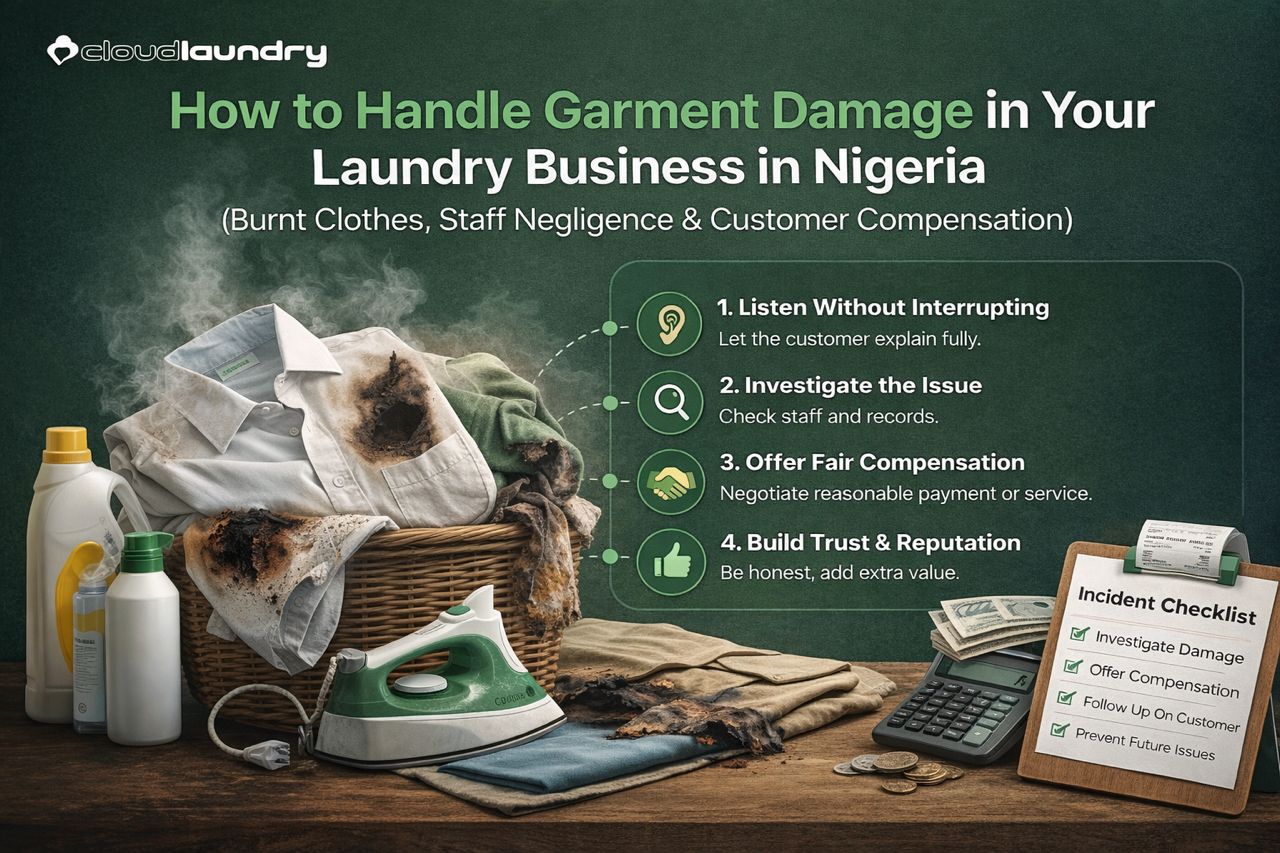
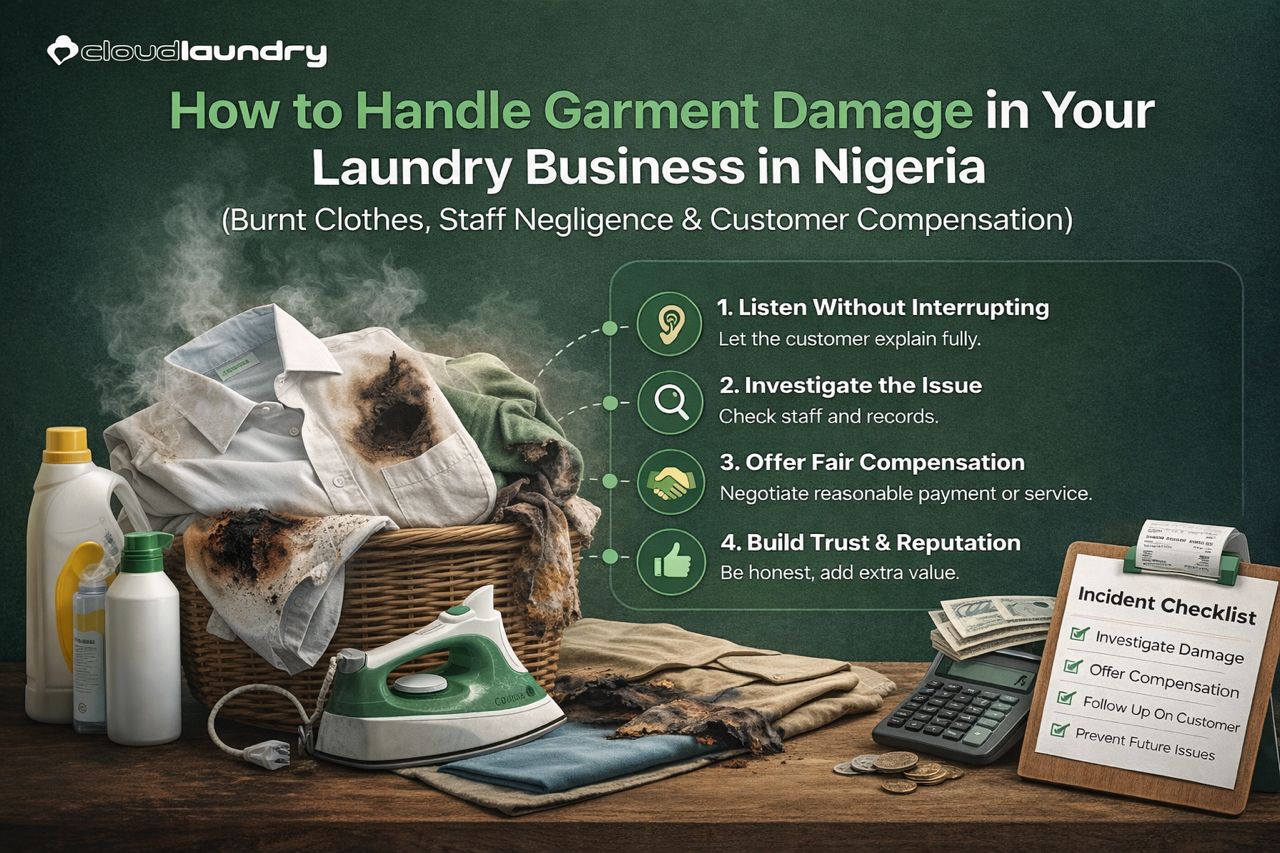
No matter how careful you are, no matter how experienced your staff is, there will always be a day when:
- A cloth gets burnt
- A fabric gets damaged
- A customer complains angrily
- Or someone demands compensation
What separates a successful laundry business from a struggling one is not the absence of mistakes, but the ability to manage them professionally, consistently, and intelligently.
In Nigeria especially, where customer expectations, emotions, and communication styles are very dynamic, handling garment damage is not just an operational task — it is a business survival skill.
This guide will walk you through everything you need to know, not just from theory, but from real-world practical experience.
The Hidden Reality Most Laundry Owners Don’t Talk About
Let’s be very honest here.
Many laundry business owners:
- Lose money silently from repeated damages
- Get bullied into overpaying customers
- Argue with customers and lose them permanently
- Fail to track what actually happened
Over time, these small issues:
- Reduce profit
- Damage reputation
- Frustrate the owner
The truth is simple:
If you don’t have a clear system for handling garment damage, your business will control you instead of you controlling it.
Understanding the True Impact of Garment Damage
Most people think garment damage is just about replacing clothes. That is a very shallow way to look at it.
Let’s break it down properly.
1. Financial Impact
You may lose money through:
- Direct compensation
- Rewashing or reprocessing
- Free services to calm customers
Now imagine this happening 3–5 times every week.
At the end of the month, that is a serious loss.
2. Emotional Stress
Customers can be:
- Angry
- Loud
- Unreasonable
If you are not mentally prepared, this can drain you as a business owner.
3. Brand Reputation
In Nigeria, one unhappy customer can tell:
- Family
- Friends
- Neighbors
And suddenly, your business is “that place that damages clothes.”
4. Staff Discipline Problems
If you don’t track damage properly:
- Staff will deny responsibility
- Carelessness increases
- Nobody is accountable
Types of Garment Damage (Deep Understanding)
To solve a problem, you must understand it deeply.
1. Burnt Clothes (Very Common)
This usually happens because:
- Iron temperature is too high
- Staff leaves iron on fabric too long
- No understanding of fabric sensitivity
Reality in Nigeria:
Many staff rush work to finish quickly, leading to overheating mistakes.
2. Fabric Weakening and Tearing
Some fabrics are already weak before washing.
But when:
- Machines are overloaded
- Clothes are handled roughly
They tear, and customers blame you.
3. Color Transfer and Staining
Mixing:
- White clothes with colored ones
- Strong dyes with light fabrics
Leads to permanent damage.
4. Missing Clothes (Very Sensitive Issue)
This is one of the worst situations.
It often happens due to:
- Poor labeling
- Mixing customer orders
- Lack of tracking system
And in most cases, the customer assumes you stole it.
The Right Mindset Before Handling Any Complaint
Before we talk about action, your mindset matters.
Never approach complaints with:
- Ego
- Anger
- Defensive attitude
Instead, think like this:
“This is an opportunity to show professionalism and protect my business.”
That mindset alone will change how you respond.
The Professional Way to Handle Garment Damage (Step-by-Step)
Step 1: Control the Situation Immediately
When a customer complains:
- Stop what you are doing
- Give them attention
- Move the conversation to a calm space
This prevents escalation.
Step 2: Listen Actively
Let the customer talk.
Even if they are exaggerating, allow them finish.
Why?
Because people calm down when they feel heard.
Step 3: Show Empathy (Not Weakness)
Say something like:
“We understand how important your cloth is, let us look into it properly.”
This reduces tension without admitting fault.
Step 4: Investigate Deeply
This is where many businesses fail.
Check:
- Who handled the cloth
- Washing process
- Ironing process
- Any prior damage
With CloudLaundry (https://usecloudlaundry.com/), you can:
- Track garment history
- Identify responsible staff
- Avoid guesswork
Step 5: Make a Fair Decision
After investigation:
- Accept responsibility if it is your fault
- Explain clearly if it is not
Never lie. It will backfire later.
Handling Compensation Like a Smart Business Owner
This is where experience matters.
The Biggest Mistake to Avoid
Many business owners:
- Panic
- Pay full compensation immediately
This encourages more exploitation.
How to Evaluate Compensation Properly
Ask:
- How old is the cloth?
- What is its current value (not original price)?
- Is the damage partial or total?
Smart Compensation Options
Instead of just paying cash:
- Partial refund
- Free laundry for a period
- Discount on future services
- Repair solution
Create a Clear Compensation Policy
For example:
- Maximum compensation limit
- No liability for undeclared expensive items
- Customers must inspect clothes on collection
Display this clearly in your shop.
Dealing With Difficult or Manipulative Customers
Let’s be real — this happens often in Nigeria.
Some customers will:
- Inflate the value of clothes
- Claim designer labels falsely
- Try to intimidate you
How to Handle It Without Losing Control
1. Stay Calm
Anger will make you lose control.
2. Stick to Your Policy
Your policy protects you.
3. Use Records as Evidence
With CloudLaundry, you have proof of:
- Order details
- Handling process
4. Offer a Balanced Solution
Do not say just “No.”
Offer something reasonable.
How to Prevent Garment Damage Completely (Advanced Level)
1. Build a Strong Staff Training System
Train staff on:
- Fabric identification
- Iron temperature control
- Sorting techniques
Repeat training regularly.
2. Create a Structured Workflow
Every cloth should pass through:
- Inspection
- Sorting
- Washing
- Drying
- Ironing
- Final check
3. Introduce Quality Control Checks
Before delivery:
- Inspect every cloth
- Confirm no damage
4. Use Technology to Eliminate Errors
Manual systems fail.
With CloudLaundry (https://usecloudlaundry.com/):
- Every cloth is tracked
- Staff accountability improves
- Errors reduce drastically
Turning a Bad Situation Into Customer Loyalty
This is where top businesses win.
1. Be Transparent
Customers trust honesty.
2. Resolve Quickly
Delays increase anger.
3. Add Extra Value
After resolution:
- Offer a small bonus
- Prioritize their next order
4. Follow Up Personally
A simple message can turn anger into loyalty.
Conclusion
Garment damage is not the end of your business. It is a test of your professionalism.
When handled correctly, it can:
- Strengthen customer trust
- Improve your processes
- Make your business more structured
In the laundry business, perfection is impossible, but professionalism is not. Build systems, train your staff, use tools like CloudLaundry, and handle every mistake with intelligence. That is how you grow a strong and respected laundry brand in Nigeria.